
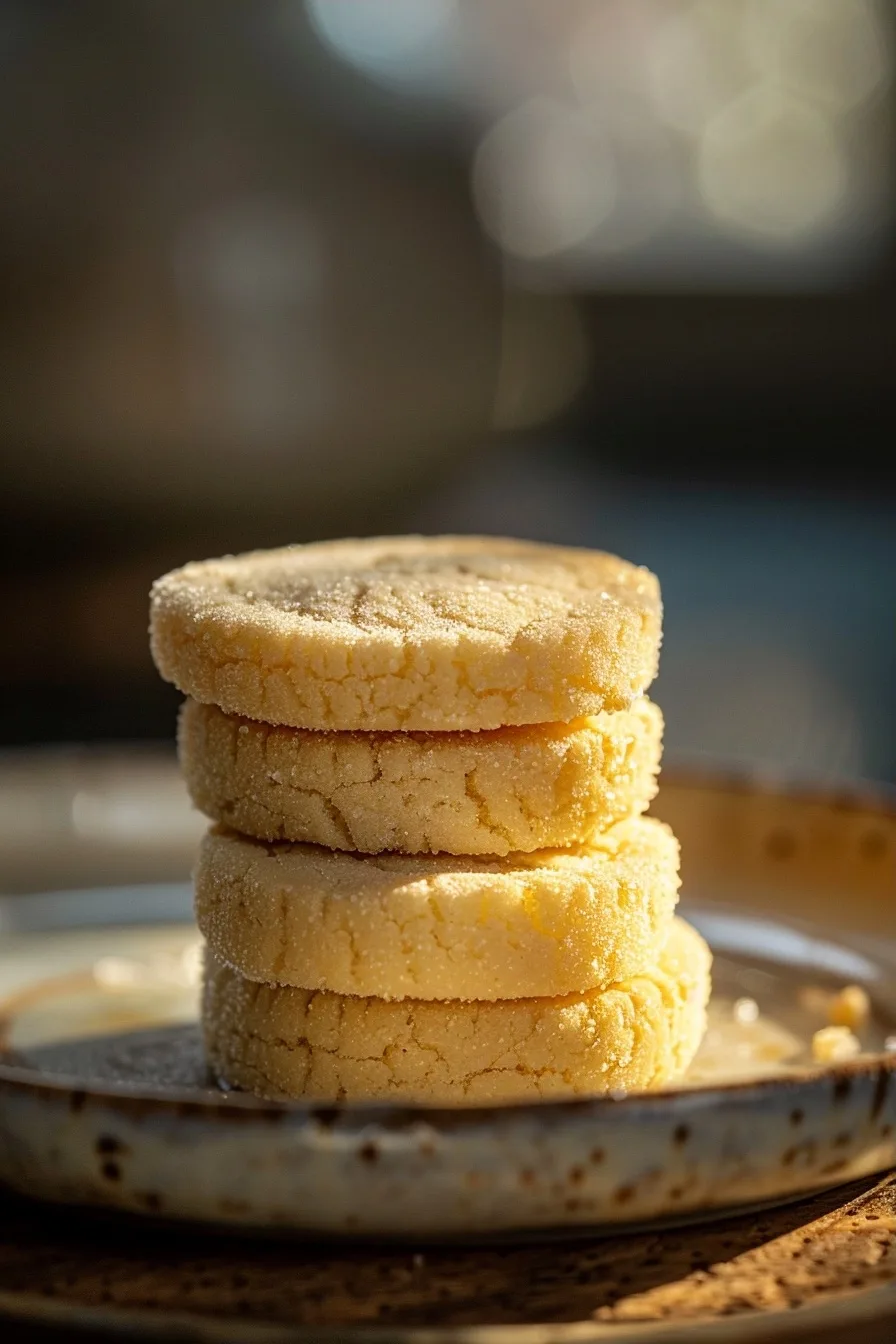
This single-serve edible sugar cookie dough delivers the classic, comforting flavor of sugar cookies without baking, offering a completely safe, raw dough experience. It’s the perfect quick treat for satisfying immediate cravings with minimal effort.
| Prep Time | Cook Time | Total Time | Servings | Difficulty | Cuisine |
|---|---|---|---|---|---|
| 5 minutes | 0 minutes | 5 minutes | 1 | Easy | American |
Why This Recipe Works
The magic behind this recipe lies in precise ingredient handling and ensuring safety for raw consumption. Traditional cookie dough uses raw flour and eggs, which carry risks of pathogens like E. coli and Salmonella. My method completely bypasses these concerns by employing heat-treated flour. This process, often achieved by baking the flour briefly or microwaving it, reliably eliminates any harmful bacteria, making it perfectly safe to eat straight from the bowl.
Furthermore, the textural goal is to mimic the delightful chewiness of baked cookie dough, but without the structural changes that heat brings. I focus on achieving a creamy emulsion between the butter and sugar, followed by the careful incorporation of the heat-treated flour and milk. This combination thickens the mixture just enough to create a cohesive, scoopable dough that feels substantial on the tongue, rather than gritty or overly wet. The minimal sugar content provides sweetness, while the vanilla extract offers its characteristic aromatic complexity.
This single-serve approach also addresses the common issue of portion control. By making just enough for one person, it prevents overindulgence and reduces waste. It’s a focused culinary experience, allowing the pure flavor of sugar cookie dough to shine without distraction. The simplicity ensures that anyone, from novice bakers to seasoned chefs needing a quick fix, can achieve satisfying results without complex techniques or equipment. It truly is a foolproof, rapid indulgence.
Ingredients
| Ingredient | Quantity | Notes |
|---|---|---|
| Unsalted Butter | 1 tablespoon (14g) | Softened to room temperature for easy creaming. Can substitute with salted butter, omitting any added salt later. |
| Granulated Sugar | 1 tablespoon (12.5g) | Provides sweetness. Could use light brown sugar for a hint of molasses flavor, though it changes the classic sugar cookie profile. |
| Heat-Treated All-Purpose Flour | 1/4 cup (30g) | Crucial for safety. See instructions for heat-treating. Alternatively, purchase pre-heat-treated flour. Using regular raw flour is unsafe for edible dough. |
| Milk | 1 teaspoon (5ml) | Whole milk provides the best richness, but 2% or skim milk works. Plant-based milk like almond or oat milk can also be used. |
| Vanilla Extract | 1/4 teaspoon (1.25ml) | Pure vanilla extract offers superior flavor. Ensure it is alcohol-free if that is a concern; most extracts are primarily alcohol but the alcohol content is negligible in such small amounts and fully evaporates upon mixing. |
| Pinch of Salt (Optional) | 1 tiny pinch (less than 0.5g) | Enhances overall flavor, especially if using unsalted butter. Omit if using salted butter. |
Step-by-Step Instructions
3.1 Preparation of Heat-Treated Flour
-
Preheat Oven: Preheat your oven to 350°F (175°C).
-
Spread Flour: Spread the 1/4 cup (30g) of all-purpose flour in a thin, even layer on a small, oven-safe baking sheet or a piece of parchment paper.
-
Bake Flour: Bake for 5-8 minutes, or until the flour reaches an internal temperature of 165°F (74°C). Use an instant-read thermometer to confirm. Be careful not to burn it; it should just be heated through.
-
Cool Flour: Remove the flour from the oven and let it cool completely to room temperature. This step is critical for edible dough safety.
3.2 Dough Formation
-
Cream Butter and Sugar: In a small bowl, combine the softened 1 tablespoon (14g) of unsalted butter and 1 tablespoon (12.5g) of granulated sugar. Using a small spoon or a mini whisk, beat them together until the mixture is smooth, creamy, and lighter in color. This process, known as creaming, incorporates air and ensures a cohesive base.
-
Incorporate Dry and Wet Ingredients: Add the cooled, heat-treated 1/4 cup (30g) of flour, 1 teaspoon (5ml) of milk, 1/4 teaspoon (1.25ml) of vanilla extract, and the optional pinch of salt.
-
Mix to Dough Consistency: Stir everything together with a spoon or spatula until just combined and a cohesive dough forms. Do not overmix; overworking can lead to a tougher texture. The dough should hold together when pressed.
Chef Tips for Perfect Results
-
Butter Temperature is Key: Ensure your butter is softened but not melted. Properly softened butter creams easily with sugar, creating tiny air pockets that contribute to a better texture. If it’s too cold, it won’t cream; if it’s melted, the dough will be greasy.
-
Accurate Flour Measurement: Spoon the heat-treated flour into your measuring cup and level it with a straight edge. Scooping directly from the bag can compact the flour, leading to a dough that’s too dry and crumbly.
-
Gentle Mixing Only: Overmixing flour can develop gluten, resulting in a tough or chewy texture instead of a tender, luscious one. Mix until the ingredients just come together into a cohesive mass.
-
Taste for Sweetness Adjustments: Before serving, you can taste a small bit to check sweetness. If using unsalted butter, a tiny pinch of salt can significantly enhance the flavor profile.
-
Achieve Proper Consistency: The dough should be thick enough to hold its shape but soft enough to eat with a spoon. If it seems too dry, add milk a tiny drop at a time. If too wet, a whisper more heat-treated flour might be needed, but be cautious not to dry it out.
Common Mistakes to Avoid
-
Using Raw Flour: The most critical mistake is failing to heat-treat the flour. Raw flour can harbor harmful bacteria, making the edible dough unsafe. Always ensure your flour is properly heat-treated and cooled before consumption.
-
Over-Creaming or Under-Creaming: Over-creaming can incorporate too much air, making the dough airy and unstable. Under-creaming results in a dough where the sugar and butter are not fully emulsified, leading to a gritty texture and poor binding.
-
Overmixing the Dough: Once the flour is added, overmixing develops gluten excessively. This can transform the intended tender dough into something unpleasantly tough or rubbery. Mix only until ingredients are just combined.
-
Incorrect Butter Consistency: Using butter that is too cold will make it impossible to cream effectively with the sugar. Melted butter will create a greasy, spreadable dough rather than a scoopable one.
Variations and Substitutions
| Ingredient | Substitution | Impact on Flavor/Texture |
|---|---|---|
| Granulated Sugar | Light Brown Sugar (1 tbsp) | Adds a slight caramel note and a touch more moisture. The cookie dough will be less bright and slightly chewier. |
| Milk (Whole) | Oat Milk (1 tsp) | Similar moisture content, slight richness. May impart a very subtle oat flavor profile, generally unnoticeable in small quantities. |
| Vanilla Extract (Pure) | Almond Extract (1/8 tsp) | Provides a different nutty aroma. Use less as it’s more potent than vanilla. |
| Heat-Treated Flour | Almond Flour (if omitting gluten) | Will create a softer, more crumbly dough with a nutty flavor. It’s not a direct 1:1 swap and might require slight moisture adjustments. Ensure almond flour is also heat-treated if consumed raw. |
Serving Suggestions and Pairings
This single-serve edible cookie dough is a dessert in itself, best enjoyed within minutes of preparation. For an elevated experience, serve it chilled slightly directly from the bowl or a small ramekin. It pairs wonderfully with a tall, cold glass of almond milk or a gourmet root beer for a completely non-alcoholic treat. Consider a side of fresh berries, like raspberries or strawberries, to add a bright, tart contrast to the sweet cookie dough.
Storage and Reheating
| Method | Duration | Exact Technical Instructions |
|---|---|---|
| Refrigeration | Up to 2 days | Transfer the dough to an airtight container or cover the bowl tightly with plastic wrap. Store in the refrigerator. The dough will firm up considerably when cold. |
| Freezing (Individual Portions) | Up to 1 month | Portion the dough into small, single-serving containers or wrap tightly in plastic wrap and then foil. Freeze. Thaw in the refrigerator for a few hours or at room temperature for about 30 minutes before consuming. |