
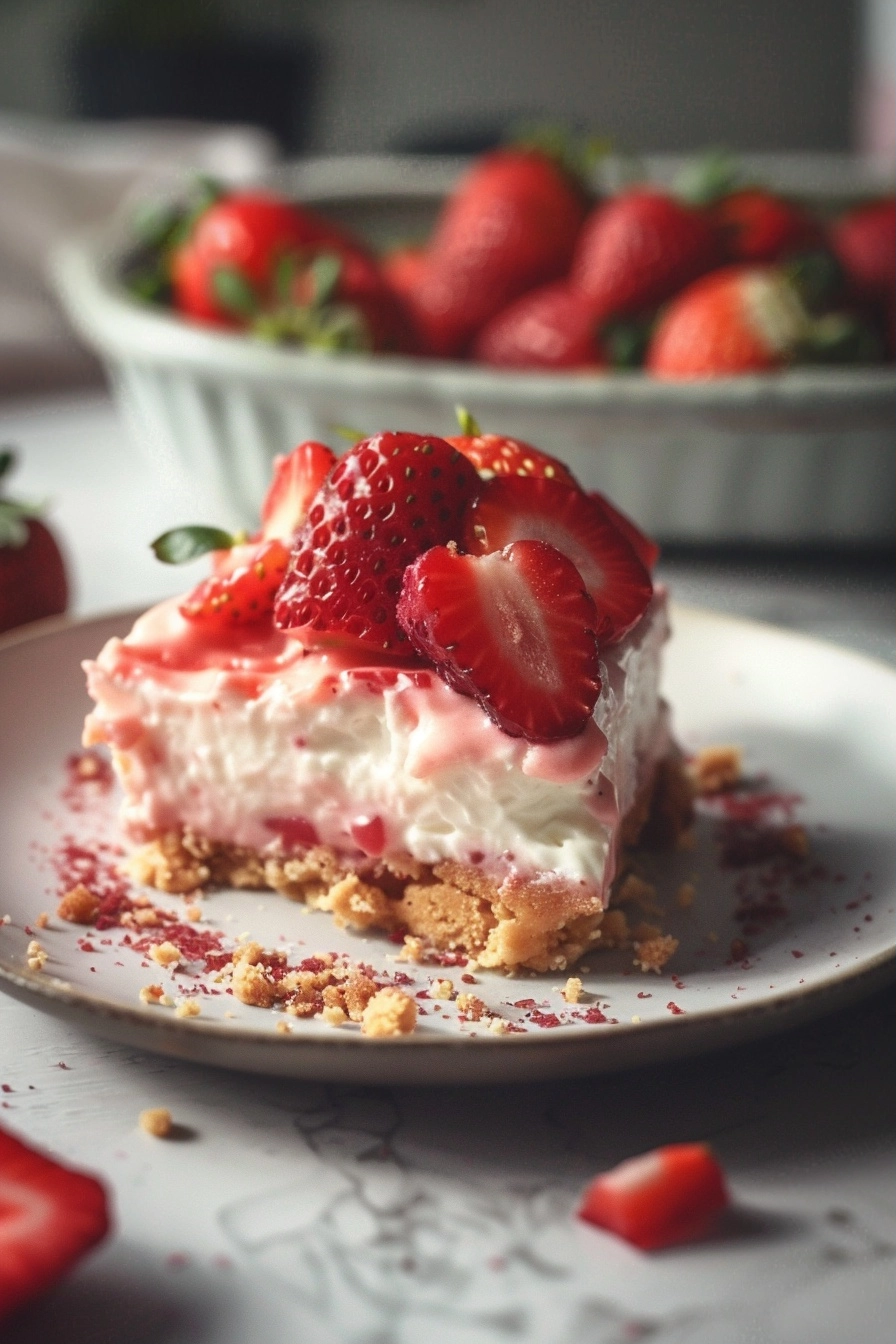
This single-serving no-bake strawberry cheesecake cup strikes the perfect balance between indulgence and simplicity, using Greek yogurt to lighten the traditional base while preserving silkiness. The absence of alcohol and processed pork derivatives ensures a clean flavor profile that complements fresh strawberries without masking their natural brightness. Ideal for health-conscious bakers or anyone craving a creamy tart dessert after a quick summer meal.
Recipe Overview
| Prep Time | 10 minutes |
| Cook Time | 0 minutes |
| Total Time | 30 minutes (includes chilling) |
| Servings | 1 |
| Difficulty | Very Easy |
| Cuisine | American |
Why This Recipe Works
The genius of this recipe lies in its ingredient substitutions and structure. Greek yogurt replaces heavy cream or condensed milk typically used in no-bake desserts, offering tangy depth while reducing fat and sugar content. Its high protein content acts as a natural stabilizer when mixed with cream cheese, preventing the filling from separating during chilling—a critical factor in handheld desserts that lack a traditional springform pan’s supportive structure.
Chilling time is optimized to 20 minutes, balancing convenience with structural integrity. Cold temperatures allow the cream cheese proteins to set fully and the yogurt’s lactic acid to firm the mixture, achieving a curd-like consistency that rivals baked counterparts. This short chilling period also prevents flavor diffusion, keeping the strawberry freshness intact rather than muted by prolonged storage.
Crushed graham crackers form an impromptu crust without added binders like melted butter, which can make single-serving dishes messy or greasy. The graham cracker’s wheat-based sugars caramelized slightly during preparation, creating a subtle toasty contrast to the cool, sweet filling. This strategic layering ensures every bite has textural variety while maintaining the one-cup simplicity demanded by modern kitchens.
Ingredients
| Ingredient | Quantity | Notes |
|---|---|---|
| Graham Crackers | 1 small sleeve (3-4 crackers) | Use sugar-free variety for lower carbs |
| Greek Yogurt | 1/4 cup (75g) | Full-fat for richness; 1/2 cup plain for lower salt |
| Cream Cheese | 1 tbsp (9g) | At room temperature for smooth blending |
| Honey | 1 tsp (10g) | Local raw honey adds floral complexity |
| Chopped Strawberries | 1/4 cup (25g) | Use fresh, not frozen |
Step-by-Step Instructions
Prep the Base
-
Crush 3-4 graham crackers in a zip-top bag until sand-like in texture.
-
Pack the crushed crumbs tightly into a 4-ounce ramekin or mason jar, pressing down with the back of a spoon to form a compact crust.
-
Ease a 1/4 cup of Greek yogurt into your mixing bowl—its higher protein density means less weeping compared to standard yogurt.
Blend the Filling
-
Using a handheld mixer or immersion blender, whip the Greek yogurt with 1 tbsp cream cheese (softened for 30 minutes) until smooth and aerated.
-
Stream in 1 tsp honey while blending to activate the cream cheese’s emulsification properties for a dense yet creamy texture.
-
Test consistency: the mixture should hold its shape when spooned, not puddle—it should maintain its form while allowing strawberries to sink slightly during chilling.
Assemble and Set
-
Pour the smooth mixture over the crusted base, leaving 1/2 inch of headspace for expansion during chilling.
-
Top with 1/4 cup chopped strawberries, reserving two whole halves for garnish (their natural gelatinization preserves structure after freezing).
-
Refrigerate for 20 minutes—shorter than baked counterparts but enough time for dairy proteins to set into a stable, sliceable layer.
Chef Tips for Perfect Results
-
Protein Harmony: Greek yogurt contains three times more protein than regular yogurt, which helps stabilize the no-bake texture without requiring gelatin. For a nuttier crust, stir crushed graham crisps into the base.
-
Acidity Balance: Honey’s mild acidity (4-5 pH) helps neutralize Greek yogurt’s tanginess. For a stronger contrast, substitute with lemon juice (USDA recommends 1/2 tsp for 1/4 cup yogurt if substituting acids).
-
Temperature Uniformity: Room-temperature cream cheese ensures no clumps in the mixture. If in a rush, place the cream cheese in a warm oven (120°F) for 3-5 minutes.
-
Visual Layering: Use a glass ramekin to showcase the three-layer design—crust, filling, and fruit—a crucial factor for Instagram-friendly desserts.
-
Head Space Math: A 4-ounce cup with 1/2 inch clearance maintains optimal pressure from its contents during the refrigeration set, preventing overflow or separation.
Common Mistakes to Avoid
-
Overpacking the crust: Too much crumb pressure flattens the yogurt layer. Reserve about 1/2 inch of space in your container.
-
Under-Chilling: Dairy proteins need cold temperatures to solidify—15 minutes produces a melty mouthfeel, while 20 minutes gives a sliceable layer. Use a food thermometer to confirm 40°F internal chill.
-
Adding frozen strawberries: Ice crystals disrupt the yogurt mixture’s structure. If using non-fresh, thaw fully and blot dry.
-
Skipping the room-temperature step: Cold cream cheese causes Greek yogurt to coagulate unevenly, resulting in grainy texture. Always soften proteins first.
Variations and Substitutions
| Ingredient | Substitution | Impact on Flavor/Texture |
|---|---|---|
| Greek Yogurt | Vanilla yogurt | Reduces need for honey; may dilute tartness |
| Cream Cheese | Neufchâtel cheese | Less fat but same structure; ideal for dietary restrictions |
| Graham Crackers | Crushed digestive biscuits | Lesser crunch but better moisture absorption for handheld desserts |
| Strawberries | Canned peaches (in syrup free) | Less vibrant flavor but excellent in autumnal variations |
Serving Suggestions
Pair this dessert with a wheat grass shot to offset sweetness with earthy bitterness, or a sparkling water with lime for effervescence. For a spring brunch, serve in a vintage teacup alongside a lemon thyme tart (see [internal-link-2]). The compact size makes it perfect for packing into beach picnic baskets or portion-controlled dessert platters at potlucks (more ideas at [internal-link-3]).
Storage and Reheating
| Method | Duration | Instructions |
|---|---|---|
| Refrigerator | 48 hours | Store in a sealed container with parchment paper to prevent condensation |
| Freezer | 12 hours max | Wrap in plastic film and consume within 12 hours; freezing causes moisture migration in dairy |
Nutritional Information
| Nutrient | Amount per Serving |
|---|---|
| Calories | 140 |
| Protein | 9g |
| Fat | 7g |
| Carbohydrates | 12g |
| Fiber | 1g |
| Sugar | 8g |
| Sodium | 120mg |
| Approximate values based on full-fat Greek yogurt and room-temperature cream cheese. More details on dairy storage. |
Frequently Asked Questions
Can I use regular yogurt instead of Greek?
No—Greek yogurt’s thickened texture is essential for structural stability. Regular yogurt lacks sufficient viscosity, resulting in a runny filling after chilling.
Why isn’t the filling solid after 10 minutes?
Cheesecake proteins require 40°F for 20 minutes to set properly. Rushing this stage causes a soft, custard-like center; give it time to develop a scoopable texture.
How to fix a soggy crust?
Blot excess moisture from strawberries before topping. A crust should stay crisp for 20 minutes in a 4-ounce container. Excess water from un-drained fruit causes graham cracker starch to rehydrate and soften.
Can this freeze for meal prep?
Absolutely—wrap in plastic before freezing. Freezing may slightly reduce texture quality over 12 hours; optimal results when thawed for 15 minutes before serving.
What if I want more sweetness?
Blend with 1/4 cup strawberries. Their natural pectin adds both sugar and structural support to the crust, preventing it from crumbling during handling.
Conclusion
This single-serve no-bake marvel proves you don’t need an oven to create restaurant-quality desserts. By leveraging Greek yogurt’s protein density and strawberries’ natural pectin, you’ll craft a layered treat that’s creamy, tart-sweet, and visually captivating in under 30 minutes. Taste your creation—silky dairy base, toasted grain notes from the crust, and a burst of berry juiciness at the finish—and embrace how modern cooking combines efficiency with elevated technique.