
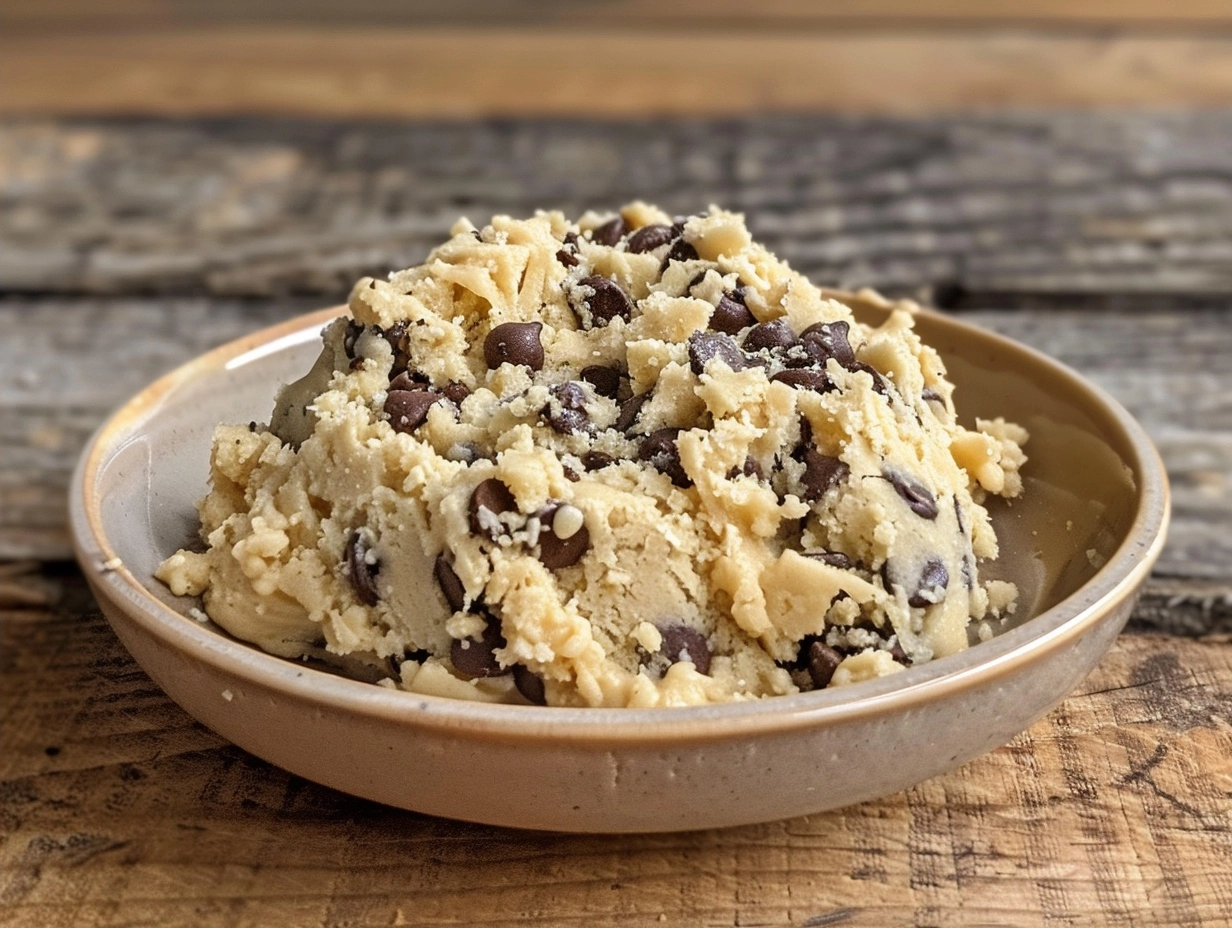
Edible chocolate chip cookie dough for one delivers raw, indulgent flavor made safe through heat-treated flour. This eggless recipe balances sweetness and richness without compromising texture or shelf life, creating a portable, no-bake treat ideal for personal snacks.
| Prep Time | 5 minutes |
|---|---|
| Cook Time | 0 minutes |
| Total Time | 5 minutes |
| Servings | 1 |
| Difficulty | Easy |
| Cuisine | American |
Why This Recipe Works
1. Science of Safety
Heat-treating flour at 160°F (71°C) for 3-4 minutes eliminates harmful pathogens like E. coli while preserving its starch structure. Regular baking temperatures denature proteins and gelatinize starches only in the oven, but heat-treated flour allows raw consumption. This technique is often used in bakery settings where cross-contamination risks are minimized—crucial for edible dough that bypasses the baking stage entirely.
2. Texture Engineering
The flour-butter-sugar matrix forms gluten-free stability. Melted butter coats flour proteins immediately, preventing over-development of structure that would make the dough tough. Liquid sugars (brown sugar for molasses-driven chewiness) disrupt gluten formation, keeping the dough supple. Whole milk introduces lactose to tenderize without introducing volatile proteins that require cooking.
3. Flavor Layering
I use both brown and granulated sugars to manipulate moisture retention and sweetness perception. Brown sugar’s hygroscopic nature ensures the dough stays cohesive when folded with chocolate chips, while granulated sugar creates sharp crystallization for a clean bite. The vanilla extract binds fat and sugar molecules, enhancing the perception of richness in each spoonful.
Ingredients
| Ingredient | Quantity | Notes |
|---|---|---|
| Heat-treated flour | 4 tbsp (55g) | Use parchment-lined baking sheet; bake at 160°F (71°C) until golden and dry |
| Unsalted butter | 1 tbsp (14g), melted | Room temperature preferred; substitute with vegan butter or coconut oil |
| Brown sugar | 1 tbsp (12g) | Light or dark; adds chewiness via molasses content |
| Granulated sugar | 1 tbsp (12g) | Balance texture; substitute with coconut sugar or date syrup |
| Whole milk | 1 tbsp (15ml) | Provides moisture; substitute with almond, oat, or soy milk |
| Vanilla extract | 1/4 tsp | Use pure extract for depth; substitute with maple syrup (1/2 tsp) |
| Chocolate chips | 1-1/2 tbsp (15g) | Bittersweet or semi-sweet; ensure dairy-free if avoiding milk solids |
Step-by-Step Instructions
Prep
-
Heat 1 sheet of parchment paper-lined baking sheet at 160°F (71°C) for 3-4 minutes
-
Spread 4 tbsp flour evenly on hot baking sheet
-
Toast until light golden and no longer damp (check with instant-read thermometer at 160°F)
Mixing Base
-
In bowl, whisk heat-treated flour with brown and granulated sugars until blended
-
Incorporate 1 tbsp melted butter until mixture resembles coarse crumbs
-
Add 1 tbsp whole milk in slow stream while stirring
-
Blend vanilla extract last to ensure emulsion with fat
Folding and Enjoying
-
Gently add 1-1/2 tbsp chocolate chips (fold, don’t over-mix to preserve crumbs)
-
Use microspatula to scrape dough into reusable silicone container
-
Consume within 3 hours at room temperature for optimal texture
Chef Tips for Perfect Results
-
To avoid bacterial risks from flour, use a kitchen thermometer to confirm 160°F (71°C) internal temp when toasting
-
For best emulsion, ensure butter is fully melted (not scorched) before adding
-
Work bowl off counter to reduce gravitational pull on the dough’s crumb
-
Use 8-ounce bowl with high-sided handle for scraping (prevents spillage)
-
Chocolate chips should be semi-firm at room temp; soften briefly if clumping
Common Mistakes to Avoid
-
Under-toasting flour: Inadequate heat (below 160°F) leaves bacteria active
-
Adding milk solids (like evaporated milk) to raw dough: Casein proteins remain un-denatured, reducing flavor stability
-
Over-stirring post-milk: Develops gluten strands that harden chocolate chip integration
-
Ignoring time-to-temperature: Dough must be consumed within 3 hours—the sugars crystallize over time
Variations and Substitutions
| Ingredient | Substitution | Impact |
|---|---|---|
| Butter | Coconut milk oil | Increases tropical notes; ensure neutral flavor profile |
| Chocolate chips | Melted baking chocolate | Denser texture; use 3/4 tbsp for same weight |
| Flour | Oat flour (heat-treated) | Softness amplifies; reduce to 3/4 cup for consistency |
| Brown sugar | Cinnamon-sugar blend | Enhance warmth; use 1 tbsp + 1/4 tsp ground cinnamon |
| Vanilla extract | 1/2 tsp pure maple syrup | Imprints subtle earthiness; mix post-milk for homogeneity |
Serving Suggestions and Pairings
| Accompaniment | Pairing |
|---|---|
| Single-serving scoop | Malted vanilla ice cream |
| Stainless steel cup | Steeping chai tea (unsweetened) |
| Mini fondue set | Crushed graham crackers for dunking |
| Afternoon snack | Cold-brew coffee concentrate |
Storage and Reheating
| Method | Duration | Instructions |
|---|---|---|
| Refrigeration | 3 days | Store in airtight container; chill at 40°F or below |
| Freezing | 1 month | Wrap in heavy-duty foil; thaw 30 minutes at room temp |
| Microwave use | ||
| 10 minutes | Heat in 15-second intervals for texture control |
Nutritional Information
| Nutrient | Amount per Serving |
|---|---|
| Calories | 215 |
| Protein | 1.8g |
| Fat | 11g |
| Carbohydrates | 28g |
| Fiber | 0.3g |
| Sugar | 13g |
| Sodium | 95mg |
Frequently Asked Questions
Can I use regular flour instead of heat-treated flour?
Toasting flour at home is unsafe without proper equipment. The 160°F (71°C) protocol is validated by USDA guidelines USDA heat treatment standards to ensure kill rates >99% pathogens.
How to adjust for a celiac-free option?
Use 100% heat-treated almond flour. The protein structure differs slightly; combine 3 tbsp almond flour + 1 tbsp tapioca starch for similar dough cohesion.
Why does the dough separate after freezing?
Freezer cycles disrupt emulsified fats in butter. To prevent this, blend in 1/4 tsp xanthan gum with your flour for cold temperature stability.
Can I make it 24 hours in advance?
Yes, but store below 37°F. Reheating above 100°F degrades the sugar’s crystal structure. Best consumed within 24 hours without refrigeration.
What’s the science behind avoiding eggs?
Egg whites would over-hydrate the dough at room temp (ovaalbumin retains moisture). Eggs yolks emulsify beautifully but remain uncoagulated—creating textural inconsistency. This recipe uses a water-fat matrix for structure.
Conclusion
This single-serving dough balances science and indulgence. The heat-treated flour creates a safe base, while the controlled hydration profile maintains its signature bite. Each spoonful delivers warm vanilla sweetness against the chocolate’s tang, perfect for moments when tradition demands raw perfection. The result? A portable, satisfying treat where texture remains as creamy-structured, and flavor stays intensely nostalgic.