
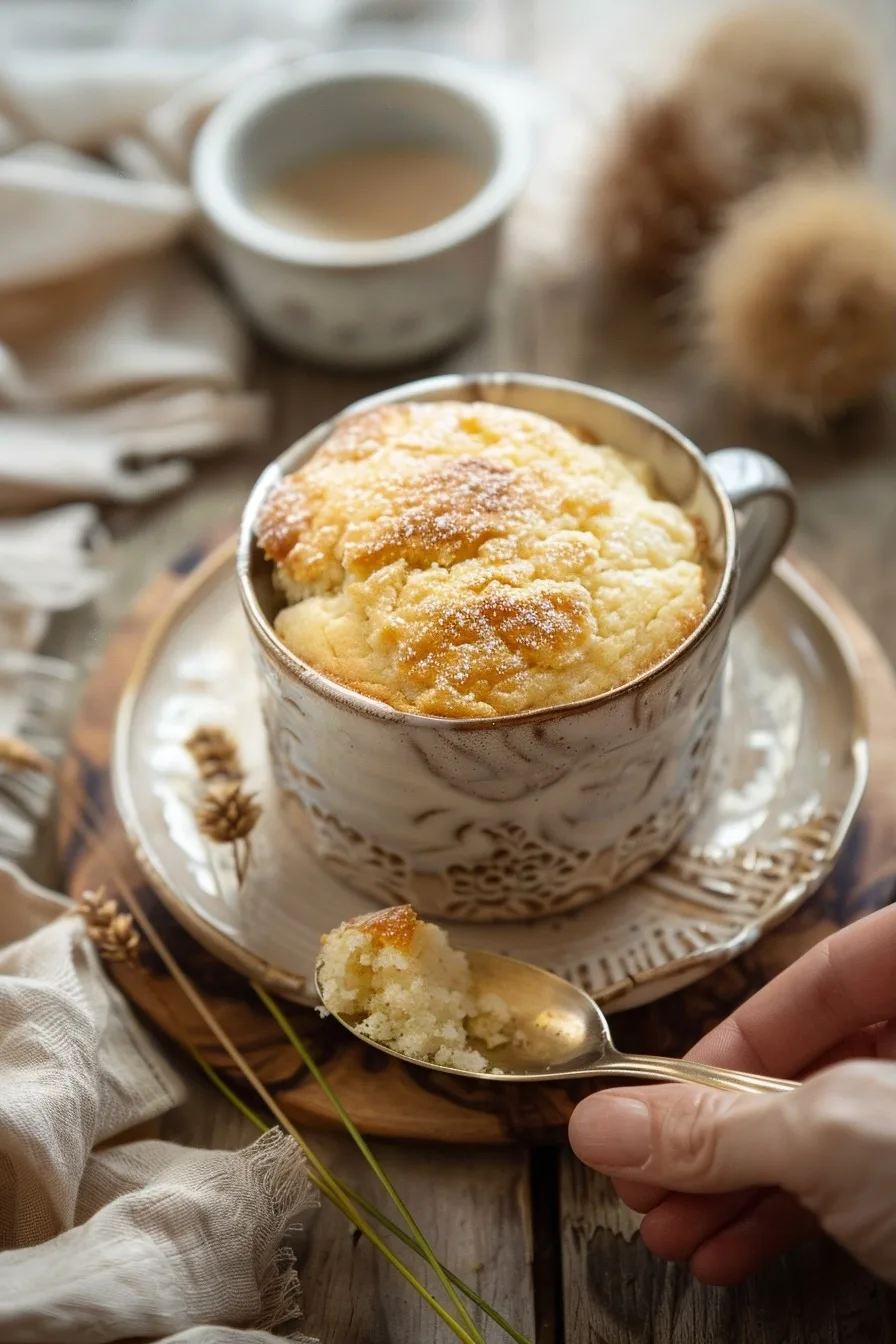
This Easy Single Serve Vanilla Buttermilk Mug Cake (Low Calorie) delivers a perfectly moist, tender cake in minutes. It’s the ideal solution for a quick dessert craving without the fuss of traditional baking projects. Chef-approved for simplicity and deliciousness, it uses pantry staples to create a satisfying sweet treat.
Recipe Overview
| Prep Time | 5 minutes |
|---|---|
| Cook Time | 60-80 seconds |
| Total Time | ~6 minutes |
| Servings | 1 |
| Difficulty | Very Easy |
| Cuisine | American |
Why This Recipe Works
As a chef and food scientist, I appreciate the elegance of this mug cake. The magic lies in understanding how heat transforms simple ingredients. When your whisking creates a smooth batter, you’re evenly distributing the flour’s starches and proteins. These proteins, primarily gluten, form a matrix when hydrated, trapping air bubbles introduced during mixing. The baking powder then reacts with the liquid, releasing carbon dioxide gas. This gas expands rapidly in the microwave’s intense heat, causing the batter to rise and create that desirable fluffy cake texture. Buttermilk is key for a tender crumb; its acidity tenderizes the gluten structure, preventing toughness.
The microwave is a phenomenal tool for single-serve baking like this. Unlike an oven that bakes from the outside in, a microwave heats food rapidly and relatively evenly using electromagnetic radiation. This direct energy transfer cooks the batter astonishingly quickly. The short cook time is critical; overcooking, even by 30 seconds, can lead to a dry, rubbery cake due to excess moisture evaporation and protein toughening. The compact environment of the mug also concentrates the steam, aiding quick and even cooking. It’s a high-efficiency cooking method perfectly suited for instant gratification with minimal kitchen cleanup.
Achieving that classic vanilla flavor profile is about balance. Pure vanilla extract provides aromatic depth, while the sugar not only sweetens but also contributes to browning through caramelization and provides moisture retention. The oil, a liquid fat, coats the flour particles, inhibiting gluten development and ensuring a tender, melt-in-your-mouth texture. Each component plays a vital role, from the leavening agent ensuring lift to the liquid providing the necessary moisture for starch gelatinization. It’s a miniature culinary science experiment yielding delicious results.
Ingredients
| Ingredient | Quantity | Notes |
|---|---|---|
| All-purpose flour | 3 tablespoons (approx. 24g) | Can substitute cake flour for an even more tender crumb. For gluten-free, use a 1:1 GF baking blend. |
| Granulated sugar | 1 tablespoon (approx. 12.5g) | Provides sweetness and aids in moisture retention. Can use a granular sugar substitute for a lower caloric option. |
| Baking powder | 1/4 teaspoon (approx. 1g) | Ensures the cake rises properly. Ensure it’s fresh for best results. |
| Buttermilk | 2 tablespoons (approx. 30ml) | Adds moisture and a slight tang, tenderizing the gluten. If unavailable, mix 2 tbsp regular milk with 1/4 tsp lemon juice or white vinegar and let sit for 5 mins. |
| Neutral oil | 1/2 teaspoon (approx. 2.5ml) | Such as canola, vegetable, or light olive oil. Adds moisture and tenderness. |
| Vanilla extract | 1/8 teaspoon (approx. 0.6ml) | Pure vanilla extract provides the best flavor. |
Step-by-Step Instructions
- Select a microwave-safe mug (around 10-12 ounce capacity). Ensure it has a stable base and no metallic trim.
- Measure all dry ingredients precisely: flour, sugar, and baking powder directly into the mug.
- Add the wet ingredients to the mug: buttermilk, oil, and vanilla extract.
- Using a small whisk or a fork, stir the ingredients vigorously until the batter is completely smooth and homogenous. Scrape down the sides and bottom of the mug to ensure no dry pockets remain. This step is crucial for even texture.
- Place the mug in the center of your microwave.
- Microwave on high power for 60 seconds.
- Check the cake’s doneness. It should look set on top, with perhaps a slightly moist center. If it appears wet, microwave in 10-second increments until just cooked through. Avoid overcooking.
- Carefully remove the hot mug from the microwave using oven mitts or a towel.
- Let the mug cake cool for at least 2-3 minutes before consuming. This allows the internal temperature to stabilize and prevents burns.
Preparation
Mixing and Cooking
Cooling and Serving
Chef Tips for Perfect Results
- Accurate Measurement is Key: Mugs vary in size, and microwave wattage differs greatly. Start with the lower end of the cooking time (60 seconds) and add increments as needed. Overcooking is the quickest route to a rubbery cake.
- Smooth Batter Foundation: Ensure there are absolutely no lumps of flour remaining after mixing. A well-emulsified batter is the base for a consistently textured cake, preventing dense spots. Use the back of a spoon or a small spatula to ensure the bottom and edges are fully incorporated.
- Buttermilk Substitute Emulsification: If making your own buttermilk substitute, allow the milk and acid mixture to sit for at least five minutes. This gives the acid time to curdle the milk slightly, creating the correct texture and acidity for tenderizing the gluten.
- Mug Material Matters: Ceramic mugs are ideal. Avoid mugs with metallic accents, as these can cause arcing in the microwave, potentially damaging your appliance or causing uneven cooking. A standard 10-12 oz mug works best to prevent overflow.
- Cooling Period is Non-Negotiable: The residual heat continues to cook the cake after removal from the microwave. Allowing it to rest prevents a gummy texture and makes it safe to eat immediately.
Common Mistakes to Avoid
- Overcooking: Microwaving for too long is the most common error. This dries out the cake, denatures the proteins excessively, and results in a tough, rubbery texture rather than a tender crumb. Always err on the side of undercooking slightly and adding 10-second bursts.
- Insufficient Mixing: Leaving dry pockets of flour or not fully incorporating ingredients leads to uneven texture. Some bites might be gummy, others dry. Whisking until the batter is uniformly smooth ensures all components are hydrated and react as intended.
- Using an Incorrect Mug Size: Too small a mug can lead to overflow during cooking as the batter rises, creating a mess and potentially an undercooked top layer. A mug that is too large might result in a thinner cake that dries out too quickly. A 10-12 ounce capacity is generally optimal.
- Forgetting Baking Powder: Without adequate leavening, the cake will be dense and flat, completely lacking the desired airy structure. Always confirm your baking powder is fresh; old baking powder loses its potency.
Variations and Substitutions
| Ingredient | Substitution | Impact on Flavor/Texture |
|---|---|---|
| All-purpose flour | Gluten-free 1:1 baking blend | May result in a slightly denser or slightly drier cake depending on the blend. Ensure it contains xanthan gum. |
| Granulated sugar | Granular sugar substitute (e.g., erythritol, xylitol) | Reduces calorie and sugar content. Some substitutes can have a slight cooling effect or different sweetness profile. |
| Buttermilk | Regular milk + 1/4 tsp lemon juice/vinegar (let sit 5 mins) | Minimal impact; achieves similar tenderizing effect. Natural cultures in true buttermilk offer slight complexity. |
| Neutral oil | Melted coconut oil (refined), unsweetened applesauce (reduced oil) | Coconut oil adds subtle coconut notes. Applesauce adds moisture but may make cake slightly gummier and less rich, reducing total fat content. |
| Vanilla extract | Almond extract, other flavor extracts (e.g., lemon, peppermint) | Completely changes the flavor profile. Use sparingly as some extracts are potent. |
Serving Suggestions and Pairings
This delicate mug cake is wonderful served warm on its own. For a slightly more indulgent experience, it pairs beautifully with a dollop of light whipped cream or a few fresh berries like raspberries or blueberries. A sprinkle of powdered sugar is also a classic, simple garnish. For a beverage pairing, consider a chilled sparkling water infused with cucumber and mint, a gourmet hot chocolate (made with water or plant-based milk), or a delicate herbal tea such as chamomile or peppermint. It’s perfect as a solo afternoon treat or a light after-dinner dessert.
Storage and Reheating
| Method | Duration | Exact Technical Instructions to Preserve Moisture and Texture |
|---|---|---|
| Storage | Up to 1 day | Once completely cool, cover the mug with plastic wrap or a small plate. Store at room temperature. Refrigeration is not recommended as it can dry out the cake. |
| Reheating | 10-15 seconds | Place the mug cake in the microwave. Heat on high power for 10-15 seconds, or just until warmed through. Overheating will quickly make it tough. |
Nutritional Information
Approximate values per serving:
| Nutrient | Amount per Serving |
|---|---|
| Calories | ~150-180 kcal |
| Protein | ~2-3 g |
| Fat | ~5-7 g |
| Carbohydrates | ~25-30 g |
| Fiber | ~1 g |
| Sugar | ~15-18 g |
| Sodium | ~150-200 mg |
Frequently Asked Questions
Can I use regular milk instead of buttermilk?
Yes, you can make a simple buttermilk substitute. Combine 2 tablespoons of regular milk with 1/4 teaspoon of white vinegar or lemon juice in a small bowl. Let it sit for about five minutes until it slightly thickens. This mixture provides the necessary acidity to tenderize the cake, mimicking buttermilk’s effect.
How do I know when the mug cake is done?
The cake is done when the top appears set, no longer liquid or excessively gooey. A slight moistness in the very center is acceptable, as it will continue to cook from residual heat. You can gently touch the top; it should spring back slightly. Avoid the toothpick test as it can be misleading in a mug cake.
Why is my cake dense and rubbery?
A dense, rubbery texture typically results from overcooking, which dries out the batter and toughens the gluten proteins. It can also be caused by insufficient leavening (old baking powder) or over-mixing the batter once flour is added, which develops too much gluten. Always stick to the lower end of the cooking time and use fresh ingredients.
Can I make this mug cake ahead of time and freeze it?
While technically possible, mug cakes are best enjoyed fresh due to their delicate texture. If you must make it ahead, cool completely, cover, and store at room temperature for up to a day. Freezing is not recommended as it can significantly alter the texture upon thawing, making it gummy or dry.
What if I don’t have a microwave-safe mug?
If you lack a suitable mug, you can use a microwave-safe ramekin or small bowl. Ensure the vessel is deep enough to prevent overflow. The cooking time might vary slightly depending on the shape and material of the container, so monitor closely during the first few attempts.
This Easy Single Serve Vanilla Buttermilk Mug Cake is a testament to smart, efficient cooking. In mere minutes, you achieve a warm, comforting, and delightfully tender cake that satisfies without derailing your intentions. The delicate vanilla aroma, the slight tang from the buttermilk, and the tender crumb combine for a truly satisfying experience. It’s proof that delicious, home-baked joy doesn’t require a lot of time or complex ingredients.