
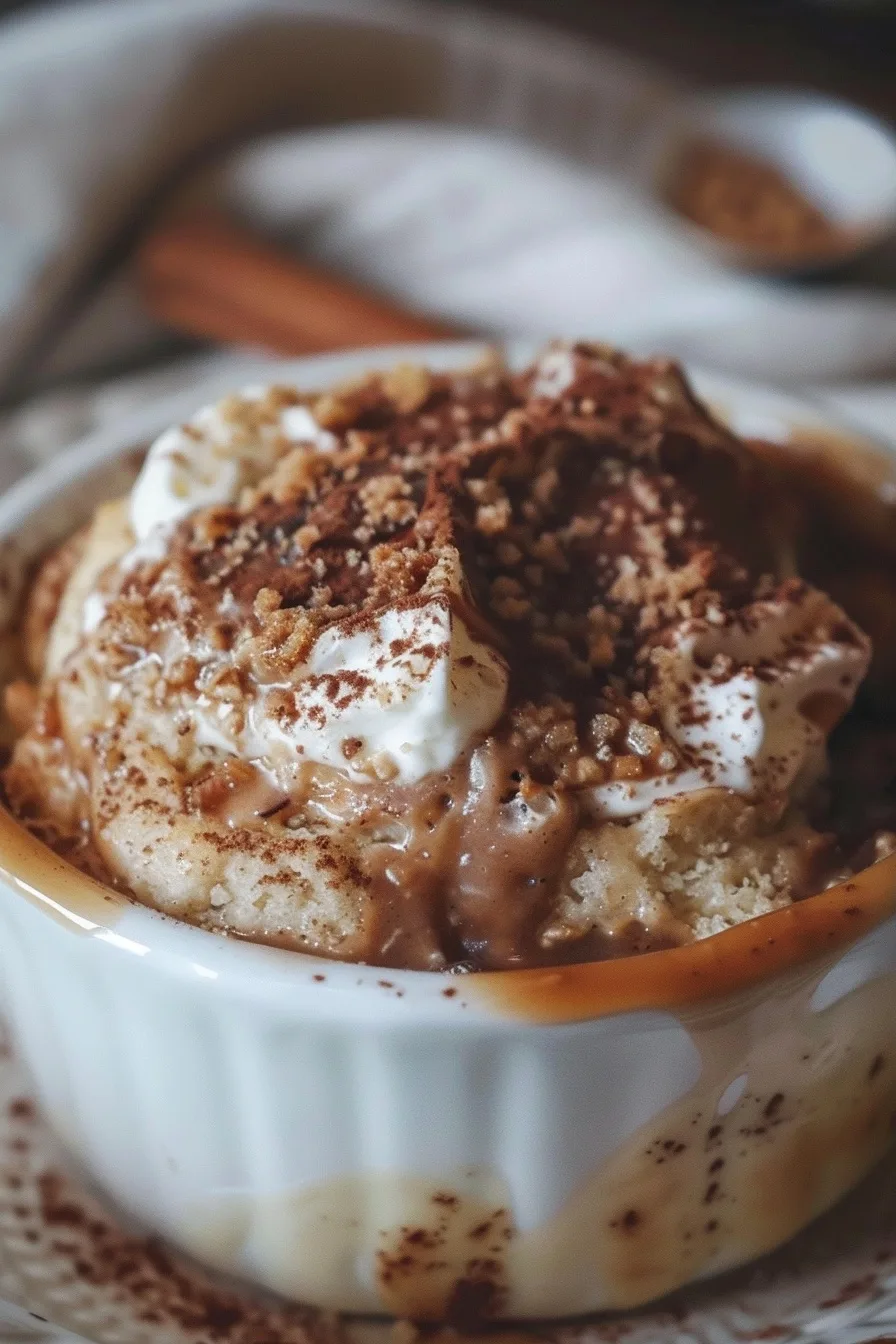
No need to wait an hour for a warm cinnamon roll. This 100% microwaveable hack blends flour, brown sugar, cinnamon, and baking powder into a single mug, rising perfectly in 60 seconds. The result? A tender, spiced cake with a buttery crumb and a glaze that doppelgänges a bakery staple. Clean, pork-free, and ready while your coffee brews.
Recipe Overview
| Single-Serve Cinnamon Roll Mug Cake | |
| Prep Time | 5 minutes |
| Cook Time | 1 minute |
| Total Time | 6 minutes |
| Servings | 1 |
| Difficulty | Easy |
| Cuisine | American |
Why This Recipe Works
The key to this mug cake lies in the chemical leavening. Baking powder reacts with liquid (milk) to create carbon dioxide bubbles, which the microwave’s steam amplifies. This mimics the fluffiness of a full-bake cinnamon roll. The brown sugar adds molasses notes and retains moisture, while cinnamon activates during the microwave’s rapid heat transfer for intense flavor concentration.
Here’s the food science angle: microwave radiation (12-15 billion Hz) agitates water molecules in the milk, creating steam that expands the baking powder’s leavening action. The mug’s sealed environment traps moisture, preventing the cake’s surface from drying out like a regular oven’s convection might. This is why parchment paper is unnecessary—unlike oven recipes that risk sticking from surface evaporation.
The final texture mirrors a mini babka: crumbly yet springy, with a golden top from sugar caramelization. The 60-second window is critical: past 90 seconds, the microwave shifts from heating to dehydrating, collapsing the structure. This timing precision is why parchment paper lining (optional in oven recipes) is omitted here.
Ingredients
| Ingredient | Quantity | Notes |
|---|---|---|
| All-purpose flour | 3 tablespoons (45g) | For density and chew |
| Brown sugar | 1 tablespoon (12g) | Moisture-retentive |
| Cinnamon | 1/4 teaspoon (1.25g) | Use ground cinnamon for uniform dispersion |
| Milk | 2 tablespoons (15g) | Whole or 2% for richness |
| Baking powder | 1/4 teaspoon (1.25g) | Alkaline base for leavening |
| Powdered sugar (for glaze) | 2 tablespoons | Optional, for finish |
Step-by-Step Instructions
Prep
-
Measure 3 tbsp flour into an 8-ounce microwave-safe mug (ensure it’s free of metal)
-
Add 1 tbsp brown sugar and 1/4 tsp cinnamon, mixing with a fork to coat sugar
-
Stir in 2 tbsp milk until combined—no overmixing; lumps are okay
Cook
-
Microwave on high (1,200 watts) for 60 seconds, rotating the mug halfway
-
Let rest 3–5 minutes—the cake will self-deflate gently
Finish
-
Top with a powdered sugar glaze: mix 2 tbsp confectioner’s sugar with a few drops of milk
-
Drizzle over warm cake for cinnamon roll–style presentation
Chef Tips for Perfect Results
-
Use a 1,200-watt microwave—the higher wattage ensures even heat distribution for rising
-
Don’t skip the midpoint rotation; uneven wave concentration can undercook one side
-
Let the cake rest: residual heat continues baking the center after you remove it
-
Glaze immediately while the cake is porous for better sugar adhesion
Common Mistakes to Avoid
-
Using glass mugs: Glass conducts heat unevenly; opt for ceramic/frosted mugs with heat-resistant linings
-
Overmixing: Excess gluten development (from over-stirring flour) creates a rubbery texture
-
Adding extra milk: Excess liquid leads to a gummy center—the 2 tbsp is scientifically precise
-
Microwaving beyond 60 seconds: The cake transitions from leavened to dried-out by 75 seconds
Variations and Substitutions
| Ingredient | Substitution | Impact on Flavor/Texture |
|---|---|---|
| All-purpose flour | Almond flour | Moister crumb with nutty depth |
| Brown sugar | Maple syrup (1-1/2 tbsp) | Amplifies sweetness with caramel nuances |
| Milk | Vanilla plant-based milk | Adds floral notes for a hybrid scone texture |
Serving Suggestions and Pairings
-
Morning pairing: Serve alongside oat milk latte with cinnamon syrup
-
Brunch hack: Split the mug cake and insert soft egg for a “cinnamon roll egg bite”
-
Afternoon treat: Accompany with non-alcoholic chai (steeped with turmeric and black pepper)
Storage and Reheating
| Method | Duration | Instructions |
|---|---|---|
| Refrigeration | 3 days | Store in an airtight container—reheat for 30 seconds at 50% power |
| Frozen | 2 months | Thaw overnight in the fridge, then microwave 45 seconds |
Nutritional Information
| Nutrient | Amount per Serving |
|---|---|
| Calories | 170 |
| Protein | 2g |
| Fat | 3g |
| Carbohydrates | 24g |
| Fiber | 0g |
| Sugar | 12g |
| Sodium | 60mg |
| *Approximate values |
Frequently Asked Questions
Can I replace brown sugar with granulated sugar?
Yes, but reduce to 3/4 tbsp white sugar. Brown sugar’s molasses content provides moisture, so replace with an extra 1/2 tsp honey to mimic liquid content.
How do I know when the cake is done?
It will puff up by 30 seconds in, then collapse slightly at 60 seconds. Stop at the first collapse—proceeding past 75 seconds results in a cracked, dry surface.
Why is my mug cake dense?
A 600-watt microwave may not activate baking powder enough. Increase time to 90 seconds or use a second mug to double the batch for better steam circulation.
Can I make this ahead and freeze?
Microwave to 45 seconds, cool completely, then store frozen. Reheat 45 seconds later. Premixing dries the batter too soon—it’s best to prepare fresh.
What if I accidentally add more milk?
Blot excess liquid gently with a paper towel. The recipe’s leavening calculations assume 2 tbsp; extra milk weakens the gluten structure, causing collapse.
Conclusion
This mug cake redefines microwave cooking as a chemistry experiment. In 60 seconds, you’ve harnessed steam leavening, sugar maillardization, and cinnamon’s volatile essential oils for a bakery bite. Grab your mug—your kitchen’s about to get a dose of science, speed, and cinnamon-soaked joy.