
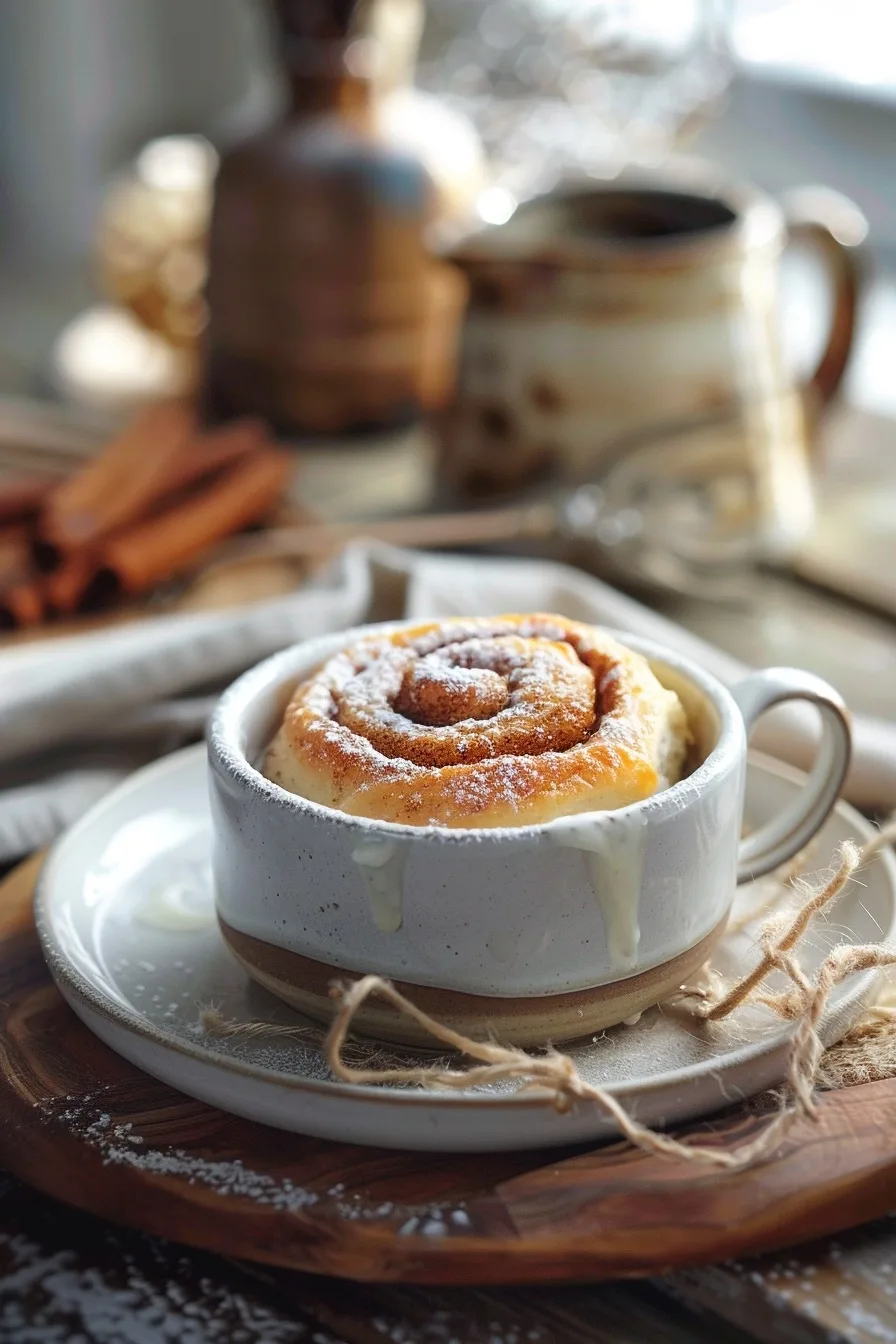
A single-serving microwave cinnamon roll in a mug represents the pinnacle of efficient baking, providing a warm, spiced pastry experience in under two minutes. This technique utilizes high-frequency electromagnetic waves to rapidly heat water molecules within a specialized oat flour batter, resulting in a soft crumb structure that mimics traditional oven-baked goods without the wait. When precision is applied to the ratio of wet to dry components, the result is a perfectly portioned individual dessert.
| Category | Details |
|---|---|
| Prep Time | 2 minutes |
| Cook Time | 1 minute |
| Total Time | 3 minutes |
| Servings | 1 |
| Difficulty | Beginner |
| Cuisine | American |
Why This Recipe Works
The science of this recipe relies on starch gelatinization occurring at an accelerated pace. By using oat flour, we provide the physical structure necessary to trap steam, which allows the batter to rise effectively during the short microwave cycle. The minimal ingredient list prevents the dense gummy texture often associated with quick microwave cakes, ensuring a tender bite.
I developed this method to maximize chemical leavening reactions that trigger immediately upon heating. Because the microwave energy pulses through the mug, the heat distribution is concentrated toward the center, which acts as the thermal core for the entire structure. Precise timing is the primary differentiator between a fluffy success and a rubbery outcome, so following the sixty-second rule is critical to structural integrity.
Flavor development in this dessert comes from the high-heat fusion of butter and cinnamon on the surface. As the heat radiates, the cinnamon oils are released, infusing the top layer of the batter with a woody, aromatic profile that mimics traditional roll centers. This pairing provides a sophisticated mouthfeel while maintaining the wholesome integrity of the oat-based composition.
Ingredients
| Ingredient | Quantity | Notes |
|---|---|---|
| Oat Flour | 3 tbsp | Creates a gluten-free structure |
| Sweetener | 1 tbsp | Granulated monk fruit or white sugar |
| Cinnamon | 1/4 tsp | Ground Ceylon variety preferred |
| Milk | 2 tbsp | Dairy or unsweetened almond milk |
| Melted Butter | 1 tsp | Provides richness and mouthfeel |
Step-by-Step Instructions
Prep
- Measure the oat flour, your choice of sweetener, and the majority of the cinnamon into a heat-safe ceramic mug.
- Add the milk to the dry ingredients, stirring vigorously with a small fork until the batter reaches a smooth, consistent viscosity without visible lumps.
Baking
- Drizzle the melted butter over the top of the batter to ensure uniform moisture distribution across the surface.
- Sprinkle the remaining cinnamon on top of the butter to create an aromatic spice crust.
- Place the mug in the center of the microwave turntable to ensure even energy distribution.
- Heat the mixture on high power for exactly 60 seconds, observing that the structure rises without overflowing.
Chef Tips for Perfect Results
- Use a mug with a wide mouth to provide more surface area for evaporation, which improves the texture of the crust.
- Always stir the batter until no air pockets remain to guarantee a uniform crumb.
- Monitor the power settings, as microwaves older than five years may have reduced power output requiring an extra ten seconds.
- Allow the base to rest for thirty seconds after the microwave dings to stabilize the starch network through cooling.
- Select a high-quality, fine-grind oat flour to ensure the moisture absorbs evenly during the rapid heat phase.
Common Mistakes to Avoid
Overcooking is the most frequent error, causing the oat flour proteins to toughen and lose their ability to trap air. If the texture resembles rubber, reduce the heating time by five seconds in subsequent attempts. Using a container that is too narrow leads to uneven heat distribution and a soggy center, so always opt for a wider shape. Finally, failing to measure components precisely can lead to a dry, crumbly finish, as oat flour is highly absorbent compared to all-purpose wheat flour.
Variations and Substitutions
| Ingredient | Substitution | Impact |
|---|---|---|
| Oat Flour | Almond Flour | Lower carbohydrate profile |
| Dairy Milk | Soy Milk | Increased protein content |
| Sweetener | Honey | Adds floral syrup notes |
Serving Suggestions and Pairings
This dish pairs exceptionally well with a small dollop of chilled Greek yogurt to balance the warmth of the spice. For guests, serve alongside a freshly brewed pour-over coffee or an herbal chai tea to enhance the cinnamon undertones. It serves as an impressive finish to a light brunch or a quick, satisfying midnight dessert.
Storage and Reheating
| Method | Duration | Technical Instruction |
|---|---|---|
| Room Temp | Immediate use | Best consumed within 10 minutes of cooking |
| Refrigeration | 24 hours | Cover with plastic wrap to prevent moisture loss |
Nutritional Information
| Nutrient | Amount per Serving |
|---|---|
| Calories | 140 |
| Protein | 3g |
| Fat | 6g |
| Carbohydrates | 18g |
Frequently Asked Questions
Can I use coconut flour instead of oat flour?
Coconut flour is highly absorbent and will require you to increase the milk quantity by at least two tablespoons to avoid a dry cake. Stick to oat flour for the most reliable, tender result.
How do I know when the roll is finished?
The top should appear firm to the touch and matte in texture, while the exterior edges will pull slightly away from the mug wall. Do not wait for the center to look liquid, as residual heat will finish the process.
Why is my cake sinking?
Sinking usually indicates excessive leavening or an undercooked center that failed to set its protein matrix. Ensure your measurements are level and do not open the microwave door before the cycle finishes.
Can I freeze the batter for later?
Freezing prepared batter is not recommended because the chemical leavening agents will activate prior to reheating. Prepare the batter fresh for every individual serving to maintain the best quality.
How can I adjust the sweetness?
You can reduce the sweetener to one half-tablespoon without impacting the overall chemical structure of the roll. The cinnamon and butter serve as the primary flavor carriers, making the sweetener secondary to the texture.
Achieving a reliable, single-serving microwave cinnamon roll in a mug is a masterclass in controlled rapid heating. By respecting the chemical properties of oat flour and maintaining clean ingredient boundaries, you produce a delicious, aromatic pastry that stands as a reliable standard for quick home baking. The final texture is light, the cinnamon profile is bold, and the butter-infused crust provides a comforting finish that invites you to savor every warm, spiced bite.