
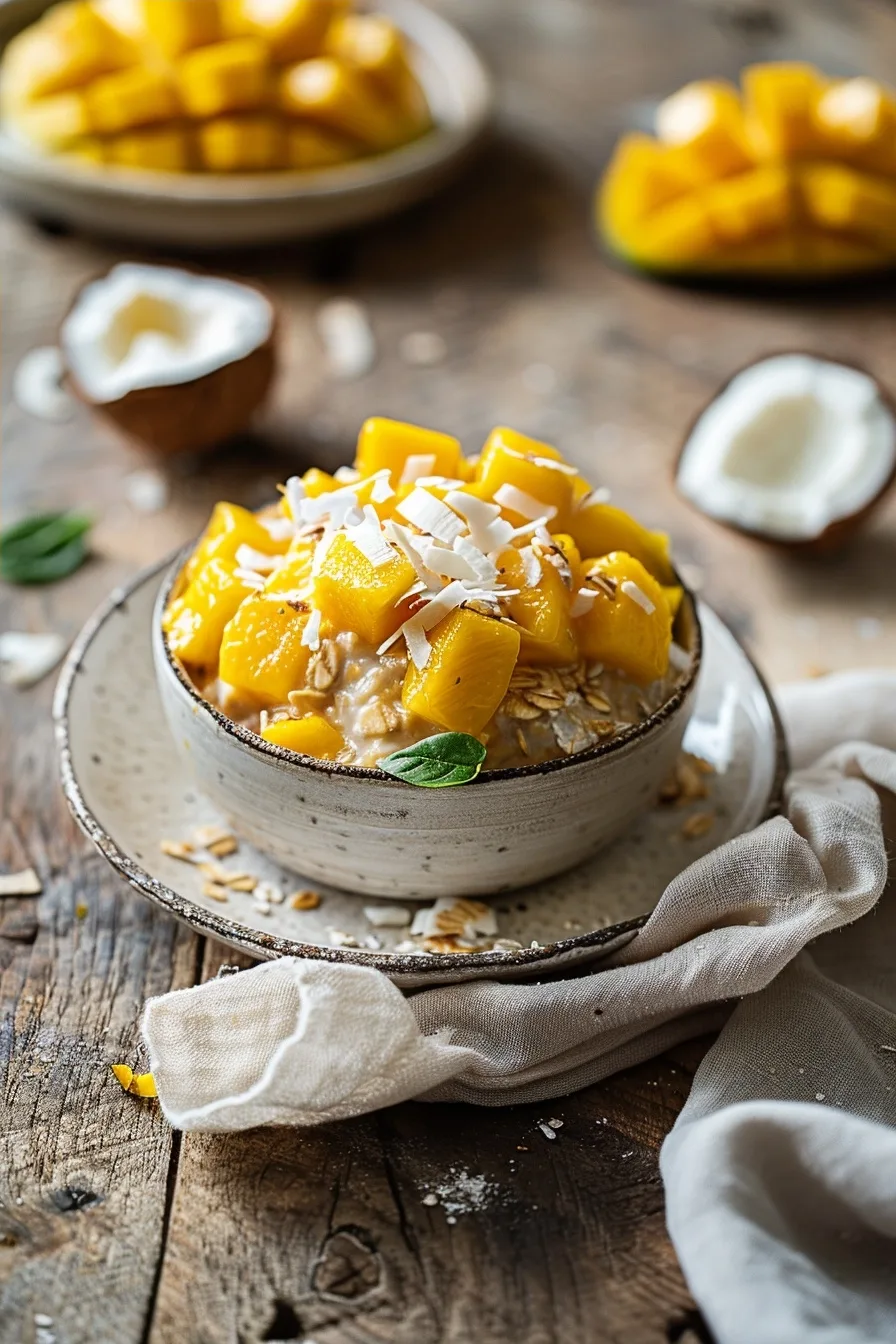
Single-serving Mango Coconut Overnight Oats provide a nutritious, efficient breakfast solution for busy mornings by utilizing cold-steeping techniques to soften whole grain textures. This dish relies on the hydration of fiber-rich oats within coconut milk to create a creamy, pudding-like consistency perfectly suited for immediate consumption. Achieving this balance requires precise ingredient ratios to ensure the oats achieve a tender bite without becoming overly mushy or thin.
| Category | Details |
|---|---|
| Prep Time | 5 minutes |
| Cook Time | 0 minutes |
| Total Time | 4 hours (minimum, preferably overnight) |
| Servings | 1 |
| Difficulty | Easy |
| Cuisine | Fusion |
Why This Recipe Works
The culinary success of these oats stems from the process of starch gelatinization at low temperatures. By soaking rolled oats in coconut milk, the grains gradually absorb liquid over several hours, breaking down the tough exterior hemicellulose. Unlike cooking over direct heat, cold steeping preserves the structural integrity of the oat, preventing the gluey texture often associated with microwaved or boiled porridge.
I choose full-fat canned coconut milk for this preparation because its natural lipid content provides a luxurious mouthfeel that masks the raw starchiness of uncooked oats. The fats in the coconut milk act as a flavor surfactant, carrying the aromatic compounds of the mango throughout the jar. Without this fat, the oats would taste flat and uninspired, lacking the necessary viscosity to hold the fruit components in suspension.
The acidity provided by fresh mango fruit performs critical work in the flavoring profile as the sugars macerate into the oats over time. This natural breakdown creates a subtle enzymatic shift that softens the fibers of the mango, allowing them to meld with the shredded coconut. By preparing this in a single-serving vessel, I ensure that the ingredient distribution remains uniform, providing a professional-grade breakfast experience with minimal prep.
Ingredients
| Ingredient | Quantity | Notes |
|---|---|---|
| Rolled Oats | 1/3 cup | Use old-fashioned, not steel-cut or instant |
| Coconut Milk | 1/2 cup | Full-fat canned provides the best texture |
| Shredded Coconut | 1 tbsp | Unsweetened ensures balanced flavor |
| Fresh Mango | 1/4 cup | Diced finely for even distribution |
Step-by-Step Instructions
Assembly
- Combine the rolled oats and coconut milk in a 16-ounce glass jar or airtight container.
- Stir the mixture thoroughly to ensure that every oat is submerged under the surface of the liquid.
- Add the shredded coconut to the jar and fold it into the oats using a small spatula.
- Place the diced mango on top of the oat mixture without mixing it in, which keeps the fruit fresh until you are ready to serve.
- Close the lid tightly and transfer the container to the refrigerator.
- Chill the jar for at least four hours or overnight to allow the oats to hydrate fully.
Chef Tips for Perfect Results
- Use wide-mouth jars to make mixing and cleaning significantly more convenient for a single serving.
- If your oats seem too thick upon serving, add an extra tablespoon of coconut milk to adjust the viscosity to your personal preference.
- Always select perfectly ripe mangoes; the increased sugar content will naturally season the oats as they rest.
- Ensure you use old-fashioned rolled oats specifically, as instant oats will break down too much and lose their texture after four hours.
- Toast your shredded coconut lightly in a dry pan before adding if you prefer a deeper, nutty caramelized flavor profile.
- Keep the storage container at the back of the refrigerator where temperatures stay the most consistent.
Common Mistakes to Avoid
One frequent error involves using steel-cut oats, which require much longer soaking times and retain a hard, gritty texture when prepared cold. Stick strictly to rolled oats for the ideal balance of tenderness and bite. Additionally, using water instead of coconut milk removes the essential fats needed to create a cohesive, creamy finished product.
Ignoring the resting time constitutes another failure, as the starch requires time to hydrate fully to be digestible and pleasant. If you consume the oats too soon, you will encounter the raw, earthy taste of starch rather than the nutty, satisfying profile of properly soaked grains. Never overfill the jar, as this makes proper mixing in the morning difficult and can lead to uneven texture distribution.
Variations and Substitutions
| Ingredient | Substitution | Impact |
|---|---|---|
| Coconut Milk | Almond milk with chia seeds | Reduces fat while adding binding structure |
| Mango | Pineapple | Increases acidity and adds tropical brightness |
| Rolled Oats | Gluten-free certified oats | Safely accommodates dietary sensitivities |
| Shredded Coconut | Toasted almond slivers | Adds crunch instead of chewiness |
Serving Suggestions and Pairings
Serve this dish cold directly from the jar for an efficient morning meal. Pair these oats with a cup of hot, unsweetened hibiscus tea to balance the richness of the coconut milk with floral acidity. For an upscale weekend presentation, transfer the oats into a glass ramekin and garnish with additional fresh mango slices, a sprinkle of toasted coconut, and a dusting of ground cardamom for aromatic complexity.
Storage and Reheating
| Method | Duration | Technical Instructions |
|---|---|---|
| Refrigerator | 3 Days | Keep in a sealed mason jar to prevent odor absorption |
| Freezer | Not Recommended | Freezing causes the starch to crystallize, resulting in a sandy texture upon thawing |
Nutritional Information
| Nutrient | Amount per Serving (Approx.) |
|---|---|
| Calories | 285 kcal |
| Protein | 6g |
| Fat | 14g |
| Carbohydrates | 35g |
| Fiber | 5g |
Frequently Asked Questions
Can I use frozen mango?
Yes, you can substitute frozen mango, but it may release more water into the oats as it thaws. To compensate, allow the mango to thaw slightly on a paper towel before adding it to the jar.
What if the mixture is too thick?
This occurs when the oats absorb all the available liquid. Simply stir in one extra tablespoon of coconut milk or water until you reach your preferred consistency.
How do I know it is ready?
The oats are ready when they have expanded and lost their raw, chewy center. A visual check should show no dry oats remaining at the bottom of the jar.
Can this be made for multiple days?
You can prepare up to three days of portions at once to simplify your morning routine. Store each portion in a separate, sealed jar to maintain freshness and prevent premature oxidation of the fruit.
Is this gluten-free?
While oats are naturally gluten-free, they are often processed in facilities that handle wheat. Always use a brand specifically labeled as certified gluten-free to ensure there is no cross-contamination.
This recipe transforms basic staples into a refined breakfast that highlights the natural synergy between cooling coconut and vibrant mango. By mastering the cold-soak technique, you create a breakfast that feels prepared with intent and care. Enjoy the clean, tropical notes that carry you through your morning with sustained energy and satisfaction. For more tips on whole grain preparation, check out the USDA nutritional database or explore expert food science insights regarding grain hydration.
Single-Serving Mango Coconut Overnight Oats
Yield: 1 serving
Ingredients: 1/3 cup rolled oats, 1/2 cup coconut milk, 1 tbsp shredded coconut, 1/4 cup diced fresh mango.
Instructions: Mix rolled oats and coconut milk in a jar, stirring in shredded coconut. Top with diced mango and refrigerate overnight or for at least 4 hours.