
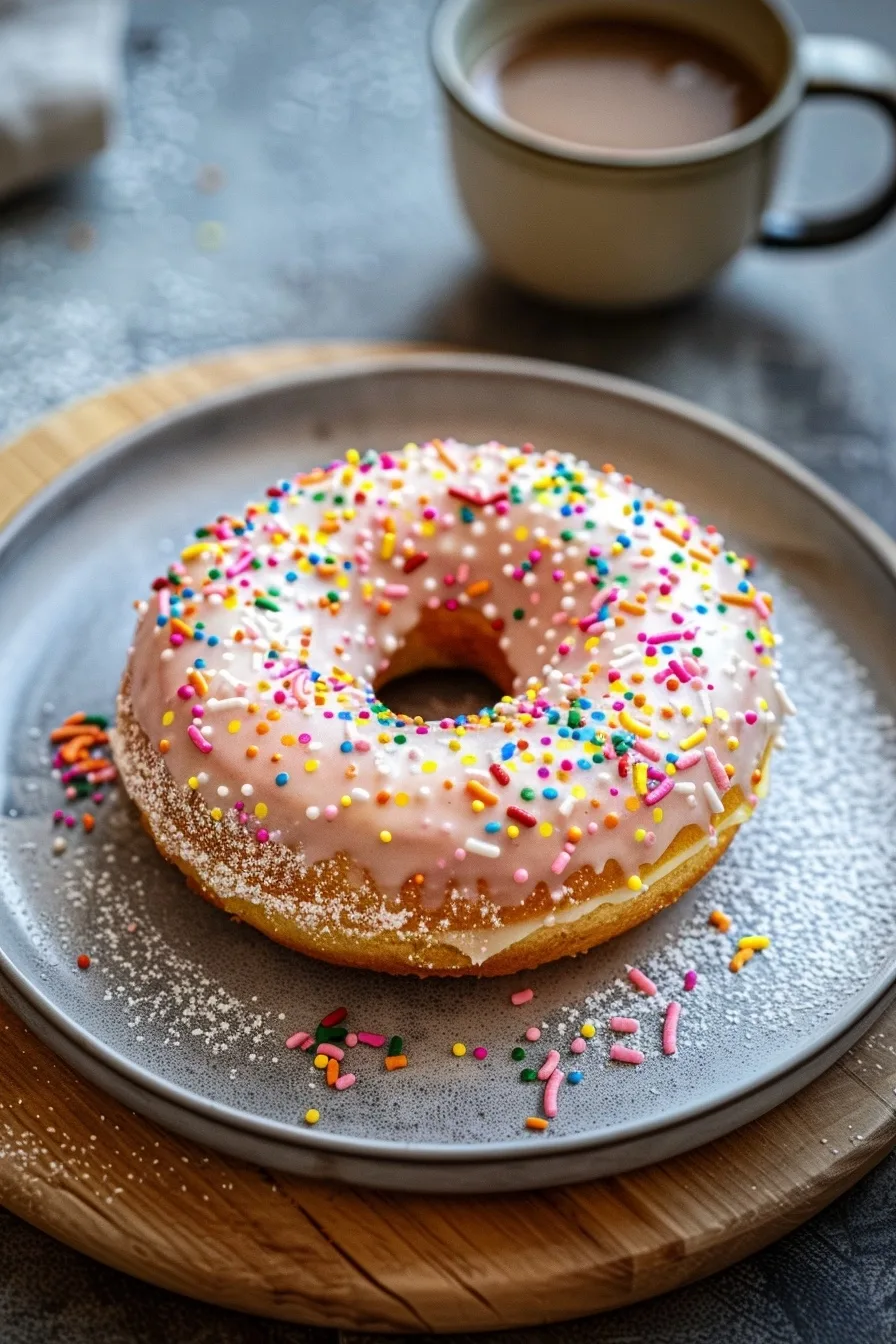
This healthy single-serve sprinkle donut mug cake is an ingenious aesthetic hack, delivering the comforting flavor of a classic donut with a fraction of the effort and fuss. It’s a perfectly portioned treat designed for quick satisfaction and visual appeal. Crafted with simplicity in mind, this mug cake transforms your microwave into a mini bakery.
Recipe Overview
| Prep Time | Cook Time | Total Time | Servings | Difficulty | Cuisine |
|---|---|---|---|---|---|
| 5 minutes | 1 minute | 6 minutes | 1 | Easy | American |
Why This Recipe Works
As a culinary scientist, I can tell you that the magic of a mug cake lies in its rapid, contained cooking environment. Microwaves excite water molecules within the batter, creating steam that cooks the cake quickly and evenly from the inside out. This method leverages that principle to achieve a moist, tender crumb in just about a minute, mimicking the texture of a baked donut without any complex mixing or oven preheating. The precise balance of flour to liquid, combined with oil (or melted butter) for richness and leavening from baking powder, ensures a light structure that holds its shape.
The structural integrity of a mug cake is crucial for its success and presentation. Flour provides the necessary gluten framework, acting as the scaffolding for the cake. When combined with liquid and heat, the starches in the flour gelatinize, setting the structure. Baking powder, a chemical leavener, releases carbon dioxide gas when heated, creating tiny air pockets that contribute to a light and fluffy texture. This rapid leavening is essential in the microwave, where there’s less time for yeast or slow chemical reactions to develop.
The integration of sprinkles is not just for aesthetics; they add pops of color and subtle textural contrast. When folded in gently at the end, they remain distinct, preventing their colors from bleeding excessively into the batter and ensuring that iconic donut visual. The maple syrup adds natural sweetness and a hint of caramel notes, complementing the simple vanilla base without overpowering it, while the milk provides the essential moisture to activate the leavening agents and bind the ingredients. This recipe is a testament to efficient flavor and texture development.
Ingredients
| Ingredient | Quantity | Notes |
|---|---|---|
| All-purpose flour | 3 tablespoons (approx. 25g) | Sifted for a finer texture |
| Maple syrup | 1 tablespoon (approx. 15ml) | Pure maple syrup is recommended for best flavor |
| Milk | 2 tablespoons (approx. 30ml) | Any dairy or non-dairy milk works |
| Vegetable oil or melted unsalted butter | 1 tablespoon (approx. 15ml) | For moisture and tenderness |
| Vanilla extract | 1/4 teaspoon | Enhances sweetness and aroma |
| Baking powder | 1/4 teaspoon | Ensures a light and airy crumb |
| Salt | Pinch | Balances sweetness |
| Sprinkles | 1 teaspoon | Use Jimmies or nonpareils for best visual effect |
| Powdered sugar (optional) | 1 teaspoon whisked with 1/2 teaspoon milk | For a simple glaze |
Step-by-Step Instructions
- Select a microwave-safe mug (approximately 10-12 ounce capacity).
- Add the flour, baking powder, and salt to the mug.
- Whisk these dry ingredients together within the mug to ensure even distribution of the leavening agent.
- Pour in the maple syrup, milk, vegetable oil (or melted butter), and vanilla extract.
- Stir with a small whisk or fork until a smooth batter forms, ensuring no dry pockets of flour remain. Scrape the sides and bottom of the mug.
- Gently fold in the sprinkles, distributing them throughout the batter without overmixing.
Prep and Mixing
- Place the mug in the center of the microwave.
- Microwave on high power for 60 seconds. Cooking times may vary based on microwave wattage; start with 60 seconds and add 10-15 second increments if needed.
- The cake should be set and slightly springy to the touch. A toothpick inserted into the center should come out mostly clean, with maybe a few moist crumbs.
- Carefully remove the hot mug from the microwave using oven mitts or a towel.
- If desired, whisk together the powdered sugar and milk in a small bowl to make a quick glaze.
- Drizzle the glaze over the top of the warm mug cake.
- Optionally, top with a few extra sprinkles.
- Allow to cool for a minute or two before enjoying directly from the mug.
Cooking and Finishing
Chef Tips for Perfect Results
- Microwave Wattage Matters: Microwaves vary significantly. Begin with the lower end of the suggested cooking time and check for doneness. Overcooking will result in a dry, rubbery cake. It’s better to undercook slightly and add a few more seconds than to overcook.
- Accurate Measurement: Use the proper measuring tools, especially for flour. Spooning flour into the measuring cup and leveling it off prevents a dense cake. Too much flour will absorb too much liquid, leading to a dry result.
- Don’t Overmix Batter: Mix until just combined. Overmixing develops the gluten in the flour excessively, which can lead to a tough, chewy texture rather than a tender crumb.
- Mug Selection: Ensure your mug is microwave-safe and has sufficient headspace. The cake will rise, so using a mug that’s too small or filling it too full can cause overflow.
- Sprinkle Distribution: Fold sprinkles in at the very end. This preserves their vibrant colors and prevents them from dissolving into the batter, maintaining their visual appeal and a slight textural pop.
- Moisture Control: The fat (oil/butter) and liquid (milk/maple syrup) are vital. Ensure they are adequately incorporated to create a moist crumb. Using a good quality pure maple syrup will also contribute to a better final flavor profile.
Common Mistakes to Avoid
- Overcooking: This is the most frequent error. Microwaves cook very rapidly. A cake cooked for too long will become tough and dry due to excessive moisture evaporation and starch over-gelatinization. Always start with less time and add more if needed based on visual cues.
- Incorrect Leavening: Using old or improperly measured baking powder will result in a flat, dense cake. Baking powder loses its potency over time, so check the expiration date. Accurate measurement is also key; too much can cause a bitter taste or excessive, uncontrolled rise.
- Dry Ingredients Not Combined: Failing to whisk the dry ingredients (flour, baking powder, salt) before adding liquids can lead to pockets of unmixed baking powder, resulting in uneven rising and a gritty texture.
- Batter Overflow: Filling the mug too full or using a mug that is too small for the batter volume will cause the cake to spill over during microwaving. Leave at least 1-2 inches of space at the top of the mug.
- Excessive Mixing: Over-stirring the batter once the wet and dry ingredients are combined can toughen the cake. This is due to overdevelopment of gluten, making the cake chewy rather than tender. Aim for a smooth batter with minimal stirring.
Variations and Substitutions
| Ingredient | Substitution | Impact on Flavor/Texture |
|---|---|---|
| Maple syrup | Honey, agave nectar, or a sugar-free syrup | Honey adds a distinct floral note; agave is milder. Sugar-free syrups will alter sweetness and texture slightly. |
| Milk | Almond milk, soy milk, oat milk, or water | Non-dairy milks can impart subtle flavors. Water will result in a slightly less rich cake. |
| Vegetable oil/Melted butter | Coconut oil (melted), unsweetened applesauce (use 1.5 tbsp applesauce per 1 tbsp oil) | Coconut oil adds a faint tropical hint. Applesauce reduces fat content, potentially making the cake slightly denser but moister. |
| Sprinkles | Mini chocolate chips, chopped nuts (if no allergies), or a pinch of cinnamon | Chocolate chips add richness; nuts add crunch and flavor depth. Cinnamon provides warmth. |
| Vanilla extract | Almond extract (use sparingly, 1/8 tsp) or a pinch of cinnamon | Almond extract adds a nutty flavor complementary to donuts. Cinnamon adds spice notes. |
Serving Suggestions and Pairings
This delightful mug cake is best enjoyed warm, straight from the microwave. For a more indulgent experience, consider a dollop of whipped cream or a scoop of your favorite non-dairy ice cream. It pairs beautifully with a steaming mug of herbal tea, a gourmet hot chocolate, or a freshly brewed cup of coffee. For a light brunch or dessert, serve alongside a small bowl of fresh berries, like raspberries or blueberries, which offer a tart contrast to the cake’s sweetness.
The ideal pairing is a beverage that complements its dessert-like character without overwhelming it. Consider a sophisticated non-alcoholic sparkling cider or a craft root beer for a festive touch. For a more refined occasion, a high-quality sparkling water infused with cucumber and mint can provide a refreshing palate cleanser. Its small size makes it perfect as a personal treat after a hearty meal or as a sweet interlude during a busy afternoon.
Storage and Reheating
| Method | Duration | Exact Technical Instructions |
|---|---|---|
| Short-Term Storage | Up to 1 day | Allow the mug cake to cool completely. Cover the mug with plastic wrap or foil. Store at room temperature. |
| Reheating | 10-20 seconds | Reheat in the microwave on low power for 10-20 seconds, or until just warmed through. Avoid overheating, which can dry out the cake. |
| Freezing (Not Recommended) | N/A | Mug cakes are best enjoyed fresh. Freezing and subsequent thawing can significantly impact moisture and texture, often resulting in a rubbery or dry outcome. The rapid cooking method is ideal for immediate consumption. For make-ahead, it’s better to prepare the dry ingredients in separate small bags. |
Nutritional Information
| Nutrient | Amount per Serving |
|---|---|
| Approximate values | N/A |
| Calories | ~180-220 kcal |
| Protein | ~3g |
| Fat | ~7-10g |
| Carbohydrates | ~25-30g |
| Fiber | ~1g |
| Sugar | ~15-20g (mostly from maple syrup and sprinkles) |
| Sodium | ~100-150mg |
Note: Nutritional values are approximate and can vary based on specific ingredients used, including type of milk, oil, and amount of sprinkles.
Frequently Asked Questions
Can I substitute the maple syrup with sugar?
You can substitute granulated sugar, but you might need to add a tiny splash more milk as granulated sugar doesn’t contain the same liquid content as maple syrup. Start with 1 tablespoon of granulated sugar and stir to ensure it dissolves relatively well before microwaving.
How do I know if the mug cake is done without overcooking?
The cake should look set around the edges and slightly moist on top. It will spring back lightly when gently pressed. A toothpick inserted into the center should come out with moist crumbs attached, not wet batter or completely clean and dry.
My cake overflowed the mug. How do I prevent this?
Ensure you are using a mug that is sufficiently large (10-12 ounces is ideal) and that you are not filling it more than two-thirds full with batter. Overfilling is the primary cause of overflow during microwaving as the cake expands.
Can I make this ahead of time and freeze it?
Mug cakes are best enjoyed fresh immediately after cooking. While you can technically freeze them, the texture when reheated is often compromised, becoming rubbery or dry. It is recommended to make it to order for optimal results.
What if I don’t have sprinkles?
If you lack sprinkles, other mix-ins like mini chocolate chips, carob chips, or a small amount of finely chopped dried fruit can be used. For a purely aesthetic hack, a dusting of powdered sugar or a simple drizzle of glaze after cooking can also provide visual appeal.
Conclusion
This healthy single-serve sprinkle donut mug cake is far more than just a quick dessert; it’s a charming culinary hack that offers instant gratification with sophisticated visual appeal. It masterfully balances the comforting essence of a beloved donut with the convenience of microwave cooking. The result is a warm, moist, and delightfully sweet confection, punctuated by pops of color from the sprinkles, that feels like a special occasion. Enjoy this miniature marvel as a perfect, fuss-free indulgence whenever a sweet craving strikes.