
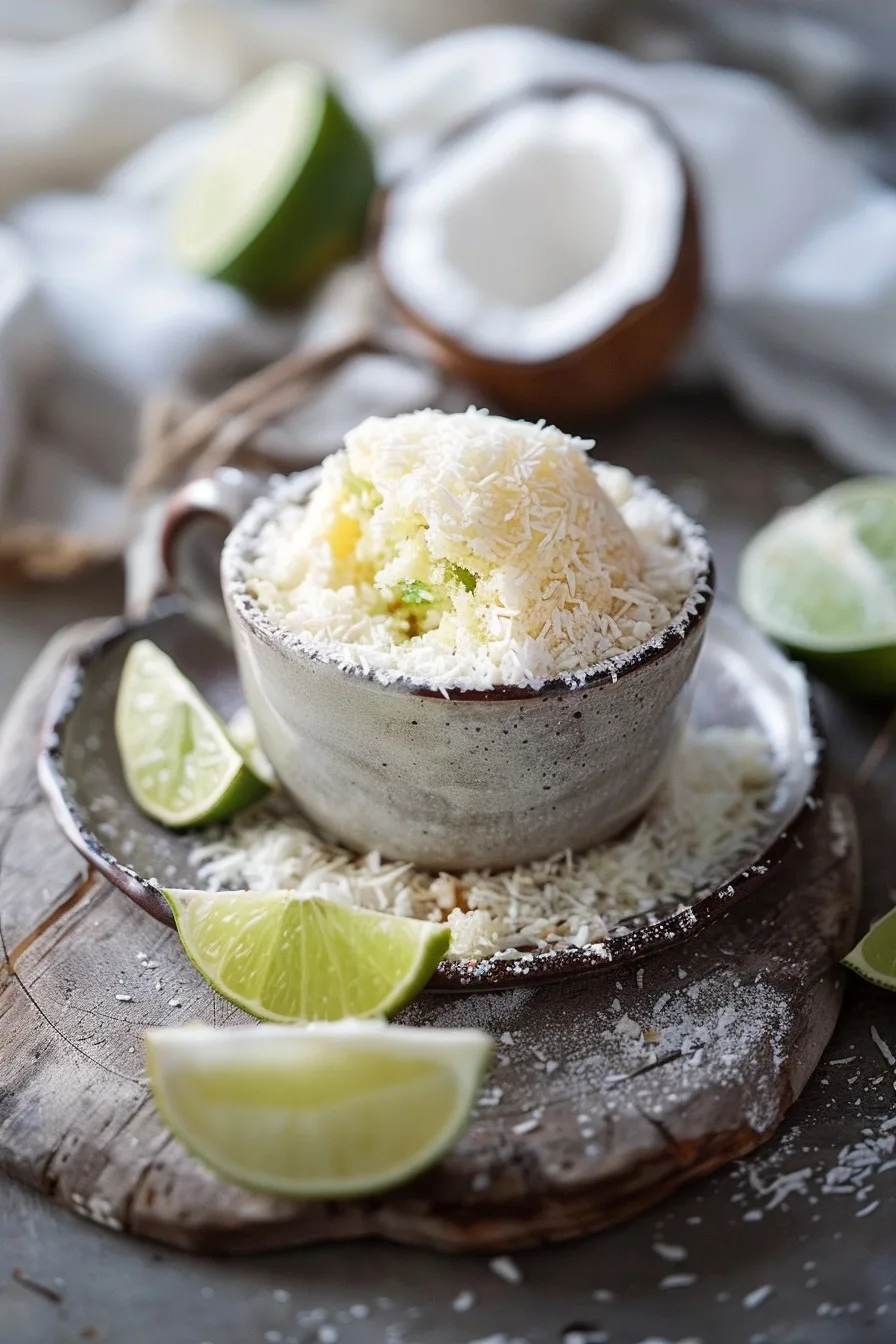
Healthy Coconut Lime Mug Cake is a rapid, single-serving dessert that combines refreshing tropical citrus with the nutty depth of coconut and hearty oat flour. This technique utilizes high-frequency microwave energy to accelerate starch gelatinization and protein denaturation, resulting in a moist, spongy crumb without the need for traditional baking. Perfect for busy mornings or sudden midnight cravings, it delivers a clean, vibrant profile that emphasizes natural flavor over processed sugars.
Recipe Overview
| Category | Details |
|---|---|
| Prep Time | 2 minutes |
| Cook Time | 1 minute |
| Total Time | 3 minutes |
| Servings | 1 |
| Difficulty | Beginner |
| Cuisine | Modern American |
Why This Recipe Works
The science of a microwave mug cake rests on rapid steam generation. Unlike an oven, which dry-bakes the exterior to form a crust, the microwave forces moisture to circulate inside the batter. This ensures that the oat flour absorbs liquid instantly, creating a structural scaffold that holds the cake together in under sixty seconds. The interaction between the lime zest and the fat in the milk highlights the bright D-limonene compounds, providing an aromatic punch that cuts through the richness of the coconut.
I chose oat flour for this recipe because of its superior fiber profile and ability to hold moisture better than refined wheat flour. The slight nuttiness of the oats pairs perfectly with the shredded coconut, preventing the lime from becoming too acidic or astringent on the palate. By utilizing the microwave, we avoid excessive heat exposure, which protects the volatile oils found in the fresh lime zest.
Achieving the perfect texture requires precise measurement. Too much milk will result in a gummy center because the excess water cannot evaporate fast enough during the brief cook time. Conversely, the specific amount of oat flour ensures there is enough starch to set the structure. This balance is critical to achieving a light, moist finish that mimics the crumb of a standard sheet cake without waiting for an oven to preheat.
Ingredients
| Ingredient | Quantity | Notes |
| Oat Flour | 3 tbsp (25g) | Check for certified gluten-free if needed. |
| Shredded Coconut | 1 tsp (3g) | Unsweetened prefered for optimal flavor control. |
| Lime Zest | 1/4 tsp (0.5g) | Freshly grated only, avoid the white pith. |
| Milk | 2 tbsp (30ml) | Dairy or high-protein plant-based milk works well. |
| Honey or Maple Syrup | 1 tsp (5ml) | Optional natural sweetener. |
| Baking Powder | 1/8 tsp (0.5g) | Crucial for aeration. |
Step-by-Step Instructions
Preparation and Mixing
- Select a microwave-safe mug with a capacity of at least 8 to 10 ounces to allow for expansion.
- Combine the oat flour, shredded coconut, baking powder, and lime zest in the mug using a small fork or whisk.
- Add the milk and optional sweetener, stirring until the batter is smooth and no dry pockets of flour remain on the bottom.
Cooking and Cooling
- Place the mug in the center of your microwave for even energy distribution.
- Heat on high for exactly 60 seconds.
- Remove the mug carefully using a heat-resistant mitt, as the ceramic will retain significant thermal energy.
- Let the cake rest for 30 seconds before eating to allow the crumb structure to stabilize.
Chef Tips for Perfect Results
- Use fresh lime zest immediately after grating, as essential oils evaporate rapidly once exposed to air.
- Ensure your baking powder is active; if it has been on your shelf for more than six months, it may fail to provide the necessary lift.
- Do not overfill your mug, as the carbon dioxide released during the heating process will cause the batter to spill over the sides.
- If the cake looks wet on top after one minute, add an additional 10 seconds of heat, but avoid exceeding 90 seconds total to prevent a rubbery texture.
- Use a wide mug for a more uniform rise, as a tall, thin mug concentrates heat at the base and can lead to uneven cooking.
Common Mistakes to Avoid
One major failure is using a mug that is too small, which leads to the batter erupting over the sides and leaving a sticky mess in the microwave. Always fill only two-thirds of the mug. Failing to measure precisely is another common error; as the physics of a 60-second bake is delicate, an extra tablespoon of liquid often ruins the crumb structure entirely. Lastly, using old lime zest removes the bright, acidic profile entirely; a dull, bitter flavor is usually the result of using zest that has dried out or includes too much of the white pith (albedo).
Variations and Substitutions
| Ingredient | Substitution | Impact on Flavor/Texture |
| Oat Flour | Almond Flour | Creates a denser, higher-fat cake. |
| Milk | Coconut Milk | Enhances the tropical profile significantly. |
| Lime Zest | Lemon Zest | Provides a more mellow, traditional citrus note. |
Serving Suggestions and Pairings
This cake is best served immediately, garnished with an extra pinch of lime zest for aroma. Pair this with a chilled glass of sparkling water infused with fresh mint or a hot cup of green tea to complement the grassy notes of the oats. For a slightly more decadent experience, a dollop of unsweetened Greek yogurt provides a creamy contrast to the citrus notes.
Storage and Reheating
| Method | Duration | Instructions |
| Room Temp | None | Not recommended; moisture loss occurs quickly. |
| Refrigerated | 24 Hours | Wrap the mug tightly to prevent the cake from drying out. |
Nutritional Information
| Nutrient | Amount per Serving (Approximate) |
| Calories | 145 Kcal |
| Protein | 4g |
| Fat | 6g |
| Carbohydrates | 18g |
| Fiber | 3g |
Frequently Asked Questions
Can I make this dairy-free?
Yes, swapping dairy milk for unsweetened almond or coconut milk works perfectly without altering the structural integrity. The proteins in plant-based milks behave similarly under microwave heat.
How do I know when it is done?
The top should appear set and slightly springy to the touch when pressed gently with a spoon. If it looks glossy or liquid, it requires another 5 to 10 seconds.
Can I double the recipe?
Avoid doubling this in a single mug, as it will not cook evenly and the center will remain raw. It is better to use two separate mugs and cook them consecutively.
Why did it sink after cooking?
Sinking usually happens if the mug is removed from the microwave too early or if the baking powder was inactive. Always wait the full 30 seconds for the crumb to stabilize.
Can I freeze the batter for later?
Freezing small batches of batter is not recommended because the baking powder will lose its potency. Mix all dry ingredients together ahead of time and keep them in a dry container for a quick assembly.
This Healthy Coconut Lime Mug Cake represents the best of accessible home culinary arts. By leveraging basic microwave physics to create a sophisticated, moist, and flavorful treat, you save time without compromising on nutritional quality. The balance of nutty oat undertones with the sharp, crisp zest of fresh lime creates an energizing profile that brightens any day. Take control of your snacks with this reliable, high-protein dessert, and enjoy the refreshing taste of a summer getaway brought directly into your kitchen in just one minute.