
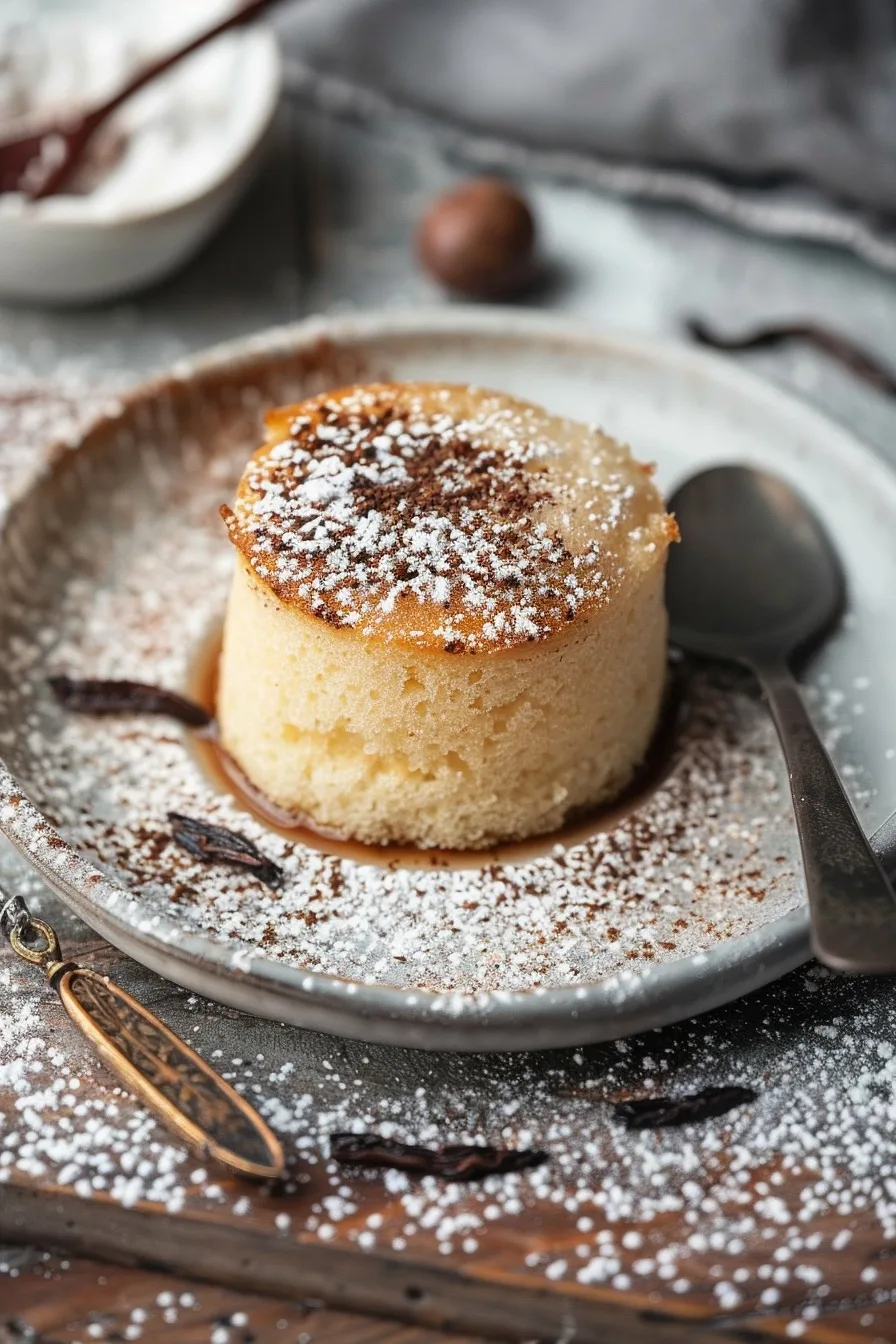
Healthy Vanilla Bean Mug Cake is a nutrient-dense, single-serving treat that utilizes finely milled oats and pure bean aromatics for a refined, rapid dessert. This science-backed method relies on precise starch gelatinization and rapid thermal conduction to transform simple pantry staples into a soft, sponge-like crumb in exactly one minute. It serves as an optimal solution for those seeking portion-controlled, wholesome sweets without the preparation time of traditional baking.
| Prep Time | Cook Time | Total Time | Servings | Difficulty | Cuisine |
|---|---|---|---|---|---|
| 1 min | 1 min | 2 mins | 1 | Easy | American |
Why This Recipe Works
The culinary logic of a mug cake hinges on the ratio of starch to hydration. By choosing oat flour, we provide a fiber-rich structure that sets faster than refined wheat flour under microwave radiation. The inclusion of vanilla bean paste is critical; unlike imitation extracts, it contains actual vanilla seeds that provide high-impact floral notes without requiring the alcohol-based solvents found in standard store-bought extracts.
Food science dictates that microwave cooking uses dielectric heating to excite water molecules within the batter. This causes internal steam generation, which leavens the cake rapidly. Because the cook time is limited to 60 seconds, the rapid evaporation of moisture is minimized, ensuring the crumb remains tender rather than turning into a tough rubbery mass. This precision depends entirely on not over-filling the vessel.
Finally, the chemistry of the dairy-free almond milk provides enough fat content to emulsify the oat starch, resulting in a cohesive structure. The sweetener works in tandem with the vanilla to round out the profile, creating a balanced sugar-to-protein ratio. By whisking until the batter is smooth, you ensure the oat flour particles are fully hydrated, preventing a gritty texture in the final product.
Ingredients
| Ingredient | Quantity | Notes |
|---|---|---|
| Oat Flour | 3 tbsp | Ensure GF certification if sensitive. |
| Natural Sweetener | 1 tbsp | Coconut sugar or monk fruit work well. |
| Vanilla Bean Paste | 1/4 tsp | Provides superior flavor to liquid extract. |
| Almond Milk | 2 tbsp | Use unsweetened for best results. |
Step-by-Step Instructions
Provisions and Mixing
-
Select a microwave-safe ceramic mug with a capacity of at least 8 ounces to allow for moderate structural expansion.
-
Add the 3 tablespoons of oat flour and 1 tablespoon of your chosen sweetener into the vessel.
-
Incorporate the 1/4 teaspoon of premium vanilla bean paste directly into the dry mixture to ensure even dispersion.
-
Pour in the 2 tablespoons of almond milk and whisk thoroughly using a small fork or narrow balloon whisk until the consistency is smooth and entirely free of lumps.
Thermal Processing
-
Place the mug in the center of the microwave turntable to ensure even heat distribution.
-
Set the microwave to high power for exactly 60 seconds.
-
Observe the cake during the final 15 seconds to ensure it does not overflow, though a properly sized mug should handle this expansion effectively.
-
Remove the mug using a heat-safe mitt, as the ceramic surface will conduct heat rapidly from the crumb.
-
Allow the dessert to rest on a flat surface for 60 seconds to permit the internal structure to stabilize through residual heat flow.
Chef Tips for Perfect Results
-
Always tap the mug against the counter twice after mixing to release trapped large air bubbles that could lead to uneven density.
-
Use a wider mug if you prefer a flatter, cookie-like textured dessert, or a tall, narrow vessel for a more traditional cake structure.
-
If the cake feels too dense, increment the milk by a half-teaspoon to increase the moisture-retaining starch slurry.
-
Check the microwave wattage; if your unit is below 800 watts, add an extra 10 seconds.
-
The cake is fully cooked when the top feels firm to the touch and springs back when lightly pressed.
-
Serve immediately to enjoy the aromatic qualities of the vanilla bean paste while the internal volatile oils are most active.
Common Mistakes to Avoid
One common failure is improper measuring; packing the flour into the spoon creates excess density, leading to a dry, dry crumb. Use the dip-and-level technique to ensure accuracy. Another issue is using the wrong mug shape, which causes uneven heat distribution; stick with standard cylindrical ceramic. Do not substitute cornstarch or arrowroot as binders, as these lack the structural protein provided by oat or grain flours. Finally, failing to let the cake rest leads to a gummy texture, as the starches have not had enough time to realign their crystalline structure after the rapid thermal agitation.
Variations and Substitutions
| Ingredient | Substitution | Impact |
|---|---|---|
| Almond Milk | Soy or Oat Milk | Increases protein but slightly alters flavor profile. |
| Sweetener | Maple Syrup | Adds complex caramel notes and liquid moisture. |
| Vanilla Bean Paste | Ground Cinnamon | Converts the profile to a warm, spiced cake. |
Serving Suggestions and Pairings
Serve this mug cake alongside a small bowl of fresh macerated strawberries to provide acidity that cuts through the vanilla richness. A small dollop of coconut yogurt or a warm herbal tea like rooibos makes for a sophisticated pairing. If serving as a post-dinner treat, a small dusting of grated dark chocolate or crushed walnuts adds essential texture contrast to the soft cake crumb.
Storage and Reheating
| Method | Duration | Handling |
|---|---|---|
| Room Temp | None | Consume immediately for best texture. |
| Refrigerated | 24 Hours | Wrap tightly in plastic to prevent dehydration; reheat for 15 seconds. |
Nutritional Information
Approximate values per serving.
| Nutrient | Amount |
|---|---|
| Calories | 145 kcal |
| Protein | 4g |
| Fat | 3g |
| Carbohydrates | 24g |
Frequently Asked Questions
Can I use another flour?
Almond flour is the best alternative if you require a lower-glycemic option, though it will result in a much denser, more moist texture. Increase the microwave time by 15 seconds to ensure the almond lipids set correctly.
What are the visual cues for doneness?
The cake should pull slightly away from the sides of the mug and have a matte, uniformly dry appearance on the top surface. A toothpick inserted into the center should emerge clean with no wet batter adhering to it.
Why did the cake collapse after removing it?
Collapsing usually indicates an excess of leavening agents or insufficient rest time after cooking. Allow the mug to cool within the microwave for 30 seconds before removing to preserve the structural integrity of the crumb.
Is this suitable for meal prep?
Dry ingredients can be pre-measured into small baggies for a quick “just add liquid” morning routine, but the batter itself should not be mixed until immediately before heating.
How to prevent the cake from spilling over?
Using a mug that is at least twice the volume of your batter is the most critical factor. The steam generation requires vertical space to expand without crossing the rim of the vessel.
This healthy vanilla bean mug cake provides a technical answer to the craving for a warm, comforting treat. By applying disciplined kitchen science to simple, quality ingredients, you achieve a result that defies the conventional limitations of microwave cooking. The final experience is one of pure, aromatic vanilla fragrance paired with a delicate, moist texture that satisfies without compromise. Enjoy the speed and simplicity of this refined culinary project as a regular addition to your wellness-focused lifestyle.